Muller v. Oregon (1908)
Significant Case
The Supreme Court decision that upheld a gender-based state labor law and set forth a legal distinction between men and women in the workplace.
Background
During the Industrial Revolution, the U.S. economy underwent a significant transition from an agricultural to a manufacturing-based economy. New technologies enabled mass production, quickly creating and changing working conditions for millions of workers. Factories commonly had dangerous machines, poor ventilation, long hours, and low wages. The Progressive movement responded to these unsafe conditions. Reformers urged local, state, and national governments to enact laws to protect workers. Workers across various industries formed unions to advocate for safety inspections, child labor laws, work hour limits, and minimum wage standards. Groups like the National Consumers League (NCL) united activists to push for workplace reforms. The NCL promoted support for employers who treated female workers well and pushed for protective legislation.
At the turn of the 20th century, nearly 25 percent of women in Portland were employed, mainly in traditional, gender-specific jobs. Laundresses, in particular, stood for 12 hours or more each workday, operating steam-powered machines, hot irons, and cleaning chemicals. In response to these conditions, women in the commercial laundry industry organized a successful strike over their irregular hours and lack of overtime pay. The International Shirt, Waist, and Laundry Workers Union demanded an eight-hour workday for all workers. However, they changed their demands once other states began passing laws establishing ten-hour workdays specifically for women. During a period of minimal government regulation, these laws aimed to protect women’s health, which was crucial for childbearing and reproductive health. New protective laws did not impact men’s jobs or their role as primary wage earners.
On January 3, 1903, Oregon passed a law prohibiting women from working more than ten hours a day. Recognizing the dangerous work conditions in specific industries, the law primarily targeted laundries and factories, especially textile mills. By passing a law that protected the health and well-being of female workers, children and the unborn were also safeguarded, promoting the public interest.
Facts
Curt Muller owned the Grand Laundry in Portland, Oregon. The laundry’s foreman, Joe Haselbock, required union employee Emma Gotcher to work overtime on Monday, September 4, 1905. That shift occurred on a new legal holiday, Labor Day, when employers were supposed to give workers the day off. The shift broke the 1903 Oregon Labor Law, which limited a woman’s workday to no more than 10 hours.
Two weeks later, the state of Oregon charged Muller with violating the law. Backed by the Laundry Owners’ Association, Muller’s attorneys filed a demurrer, arguing that the Oregon state law was unconstitutional because it violated the Due Process Clause of the Fourteenth Amendment of the Constitution, citing the Court’s precedent established in Lochner v. New York (1905). Lochner held that a state could not interfere with employee contracts when health, public safety, or morals were not at stake. The state of Oregon argued that the law protected women’s health and did not violate the Constitution; therefore, Muller violated state law. In January 1906, the Circuit Court of Multnomah County found Muller guilty of a misdemeanor and fined him $10.
On appeal, the Oregon Supreme Court upheld the lower court’s ruling. Muller appealed to the Supreme Court of the United States, and it heard the case in January 1908.
Issue
Does an Oregon law limiting the hours women are allowed to work violate the right to freedom of contract under the Due Process Clause of the Fourteenth Amendment?
Summary
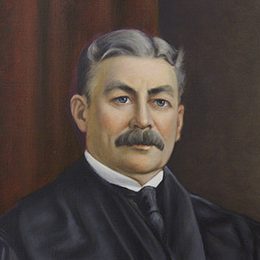
In a unanimous opinion, the Supreme Court upheld Oregon’s 1903 labor law. Writing for the Court, Justice David J. Brewer argued that “facts of common knowledge” justified limiting a woman’s workday to 10 hours. He explained that
(a). the physical organization of women, (b). her maternal functions, (c). the rearing and education of children, (d). the maintenance of the home—are all so important and so far-reaching that the need for such reduction need hardly be discussed.
The attorney for the state of Oregon, Louis D. Brandeis, wrote an influential brief that Justice Brewer cited multiple times. Brandeis argued that the Oregon law protected women and their role in society as mothers and childbearers. Without the law, employers could exploit female workers and endanger them and their reproductive capacity with long hours and poor conditions. Additionally, because women were physically and psychologically different from men, states should be allowed to create gender-based labor laws. Although the Court had previously held that the Fourteenth Amendment prohibited government interference with freedom of contract, the state government had oversight powers to protect certain groups. Considering Brandeis’ arguments, Justice Brewer concluded that “healthy mothers are essential to vigorous offspring,” so “the physical wellbeing of women becomes an object of public interest and care….”
Precedent Set
The Muller decision set forth a legal distinction between men and women in the workplace. Several states enacted maximum work hour laws to protect women’s health following the decision. Public interest in safeguarding the future of the human race justified those state laws. The Supreme Court consistently upheld laws limiting women’s working hours, and most states maintained gender specific employment laws until the 1960s. With the passage of the Civil Rights Act of 1964 and Title IX in 1972, along with multiple Supreme Court decisions that addressed sexual discrimination, the influence of the Muller decision began to diminish. In 1982, after the deadline for the Equal Rights Amendment passed, the scholarly community reviewed the Muller decision with a more modern perspective; some questioned if it remained the progressive win that activists had always claimed it to be.
Muller also set a new precedent for the process whereby future Supreme Court opinions were formulated. Before the Muller decision, Supreme Court opinions were formal, cited case precedent, and relied upon abstract legal reasoning. In contrast, the brief introduced by Louis D. Brandeis utilized sociological jurisprudence, relying solely on “common sense” facts rather than legal reasoning. The Brandeis Brief presented statistics and data to explain the impact of women’s roles in the workplace, rather than relying on court precedent, in defense of the state law. Following the new style of brief submitted to the Court in the Muller v. Oregon case, advocates began adapting their briefs to match that format. At the same time, Supreme Court justices began to incorporate facts, statistics, and studies into their decision-making process for future cases. For example, in the Brown v. Board of Education of Topeka (1954) case, the Justices considered how adverse childhood experiences in the classroom could impact their lives outside of school. Later, in the Tinker v. Des Moines (1969) case, the Justices considered the role minors play in society and how their rights were continually evolving.
Additional Context
Josephine Goldmark and Florence Kelley, social reformers and members of the NCL, influenced the labor movement and the Muller case. After Muller lost his appeal in the Oregon Supreme Court, Kelley persuaded the state of Oregon to find an experienced lawyer to argue their case. Goldmark recruited her brother-in-law, Boston attorney Louis D. Brandeis, as the advocate for the state of Oregon. Josephine and her sister, Pauline, were instrumental in researching and obtaining the medical journal findings, statistics, and testimonies found in the 113 pages of the Brandeis Brief.
While some reformers championed the Muller decision as a win for working-class women, it divided women’s rights groups. The NCL declared victory, but the National Women’s Party, founded in 1917 to advocate for women’s suffrage, opposed special protection and called for legislation to control maximum working hours for all workers. It pointed out that some female workers, such as printers and streetcar conductors, were fired from jobs that had formerly been reserved for men because women were not allowed to work overnight shifts. Those occupations paid more than the jobs into which women were segregated, such as cleaning homes. If maximum hours laws covered all workers, employers would not have the option of firing one sex because the other would be subject to the same restrictions. In sum, laws that “protected” women’s health also limited their earning potential and career growth, which made them a source of controversy well into the 1960s.
Decision
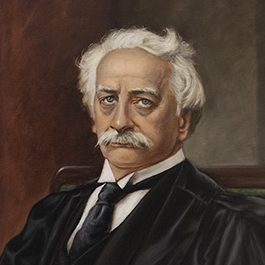
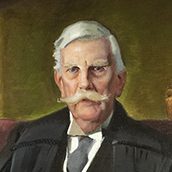
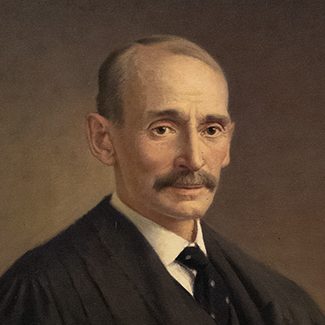
The Court ruled 9-0 to uphold the Oregon labor law.
- Majority
- Concurring
- Dissenting
- Recusal
-
Fuller
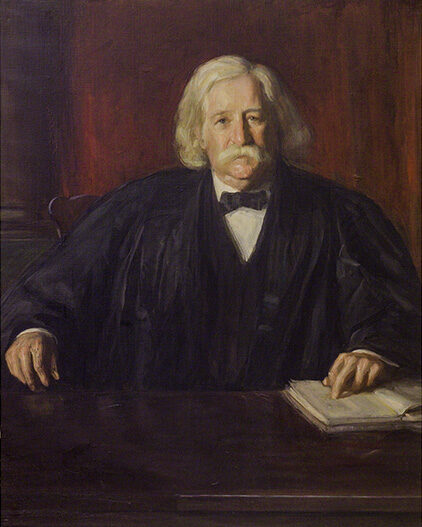
-
Harlan
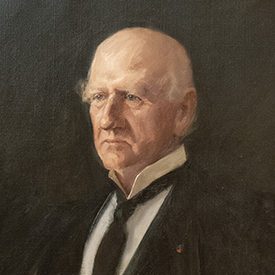
-
Brewer
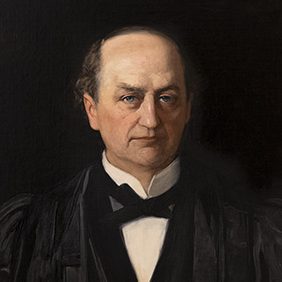
-
White
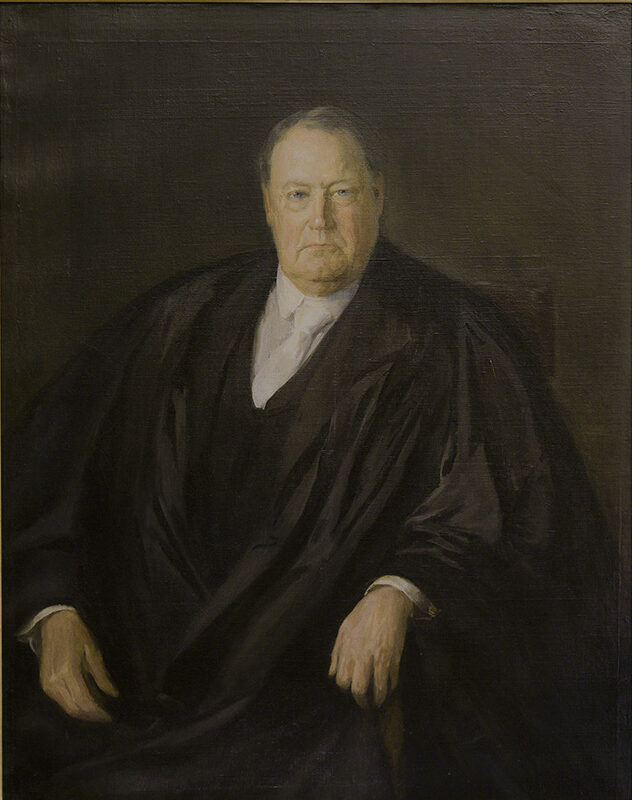
-
Peckham
-
McKenna
-
Holmes Jr.
-
Day
-
Moody
-
Majority Opinion
David J. BrewerRead More CloseThat woman’s physical structure and the performance of maternal functions place her at a disadvantage in the struggle for subsistence is obvious. This is especially true when the burdens of motherhood are upon her. Even when they are not, by abundant testimony of the medical fraternity, continuance for a long time on her feet at work, repeating this from day to day, tends to injurious effects upon the body, and, as healthy mothers are essential to vigorous offspring, the physical wellbeing of woman becomes an object of public interest and care…
Discussion Questions
- How did the Portland unions contribute to the passage of the 1903 Oregon Labor Law?
- Why did Curt Muller challenge the 1903 Oregon Labor Law?
- Progressives argued that protective legislation, such as the Oregon Labor Law, represented progress because it safeguarded women in the workplace and helped ensure a more equitable society. Do you agree or disagree, and why?
- How did gender-based labor laws produce unintended outcomes?
- Why did the Court decide that women needed work limitations, but not men (Lochner v. New York)?
- Louis Brandeis, the attorney for the state of Oregon, used sociological jurisprudence in his brief to the Supreme Court. How was this a change from the way advocates argued at the Supreme Court?
Sources
Special thanks to Nancy Woloch, adjunct professor at Barnard College and Columbia University, for her review, feedback, and additional resources.
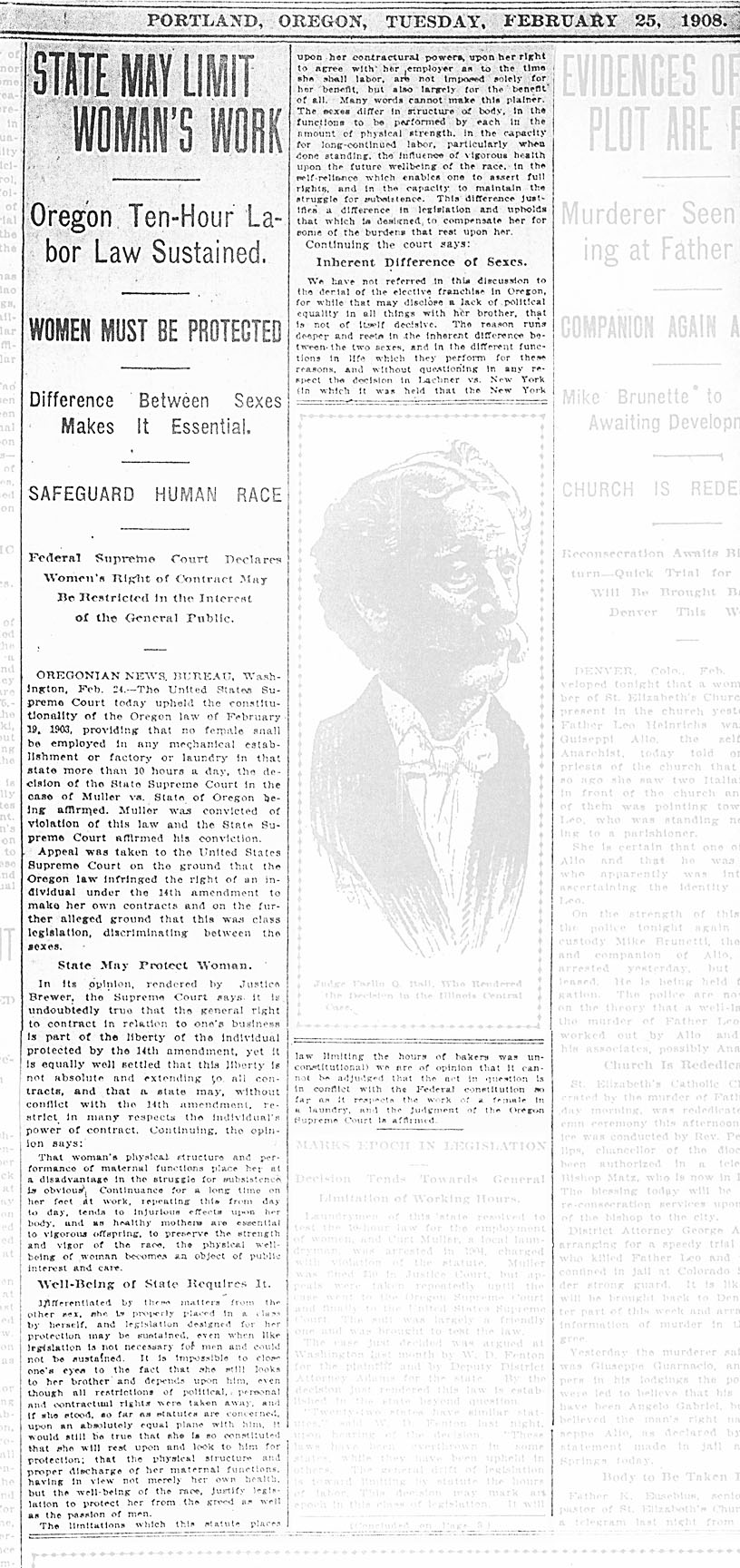
Featured image: Article from Oregonian. 25 February 1908. Oregon Historical Society. https://www.oregonhistoryproject.org/articles/historical-records/news-article-state-may-limit-woman39s-work/.
Cushman, Clare. “Protecting Women’s Health and Morals.” Essay. In Supreme Court Decisions and Women’s Rights: Milestones to Equality, 16–19. Washington, D.C.: CQ Press, 2011.
Lipin, Lawrence. “Muller v. Oregon (1908).” The Oregon Encyclopedia, June 21, 2022. https://www.oregonencyclopedia.org/articles/muller_v_oregon_1908_/.
“Muller v. Oregon.” Oyez. Accessed September 3, 2025. https://www.oyez.org/cases/1900-1940/208us412.
Norwood, Arlisha R. “Florence Kelley.” National Women’s History Museum, 2017. https://www.womenshistory.org/education-resources/biographies/florence-kelley.
Sklar, Kathryn Kish. “Josephine Clara Goldmark.” The Shalvi/Hyman Encyclopedia of Jewish Women, February 27, 2009. https://jwa.org/encyclopedia/article/goldmark-josephine-clara.
State v. Muller, 85 P. 855, 48 Or. 252 (Or. 1906)
State v. Muller, Respondent Brief. Oregon Supreme Court, Oregon State Archives. Case 6412, drawer 67.
Wells, Emma (2023). Muller v Oregon: Reassessing Protective Legislation. The Graduate Review, 8, 76-93. Available at: https://vc.bridgew.edu/grad_rev/vol8/iss1/10
Woloch, Nancy. “Chapter 3 – A Class by Herself: Muller v. Oregon (1908).” Essay. In A Class by Herself: Protective Laws for Women Workers, 1890s-1990s, 54–84. Princeton, NJ: Princeton Press, 2015.
Woloch, Nancy. Muller v. Oregon: A brief history with documents. Boston, MA: Bedford Books/St. Martin’s, 1996.