Portland, ME
Hometowns Program
Summer 2026
Investigate local Sixth Amendment case United States v. Fanfan (2005).
Application Closed
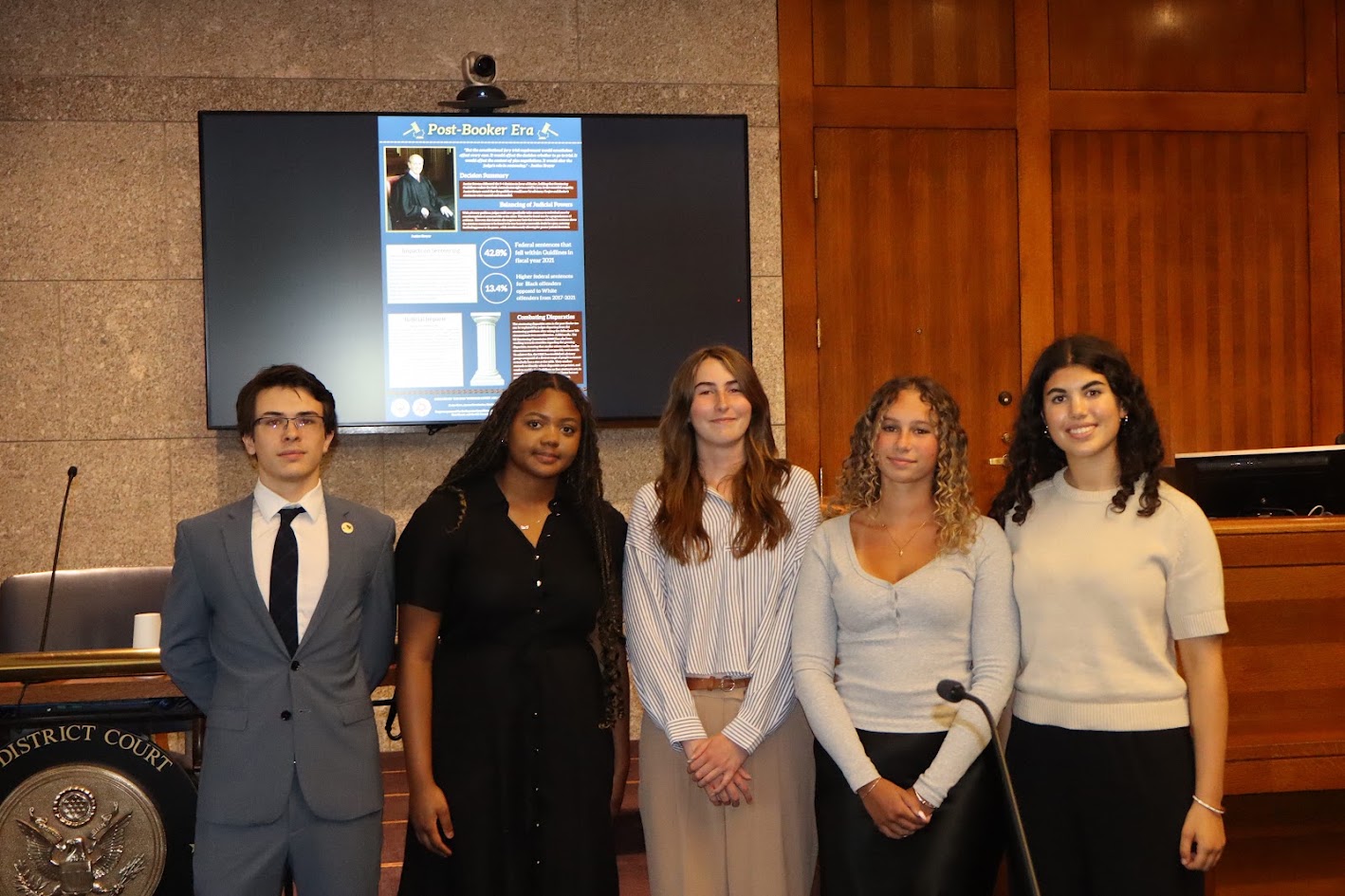



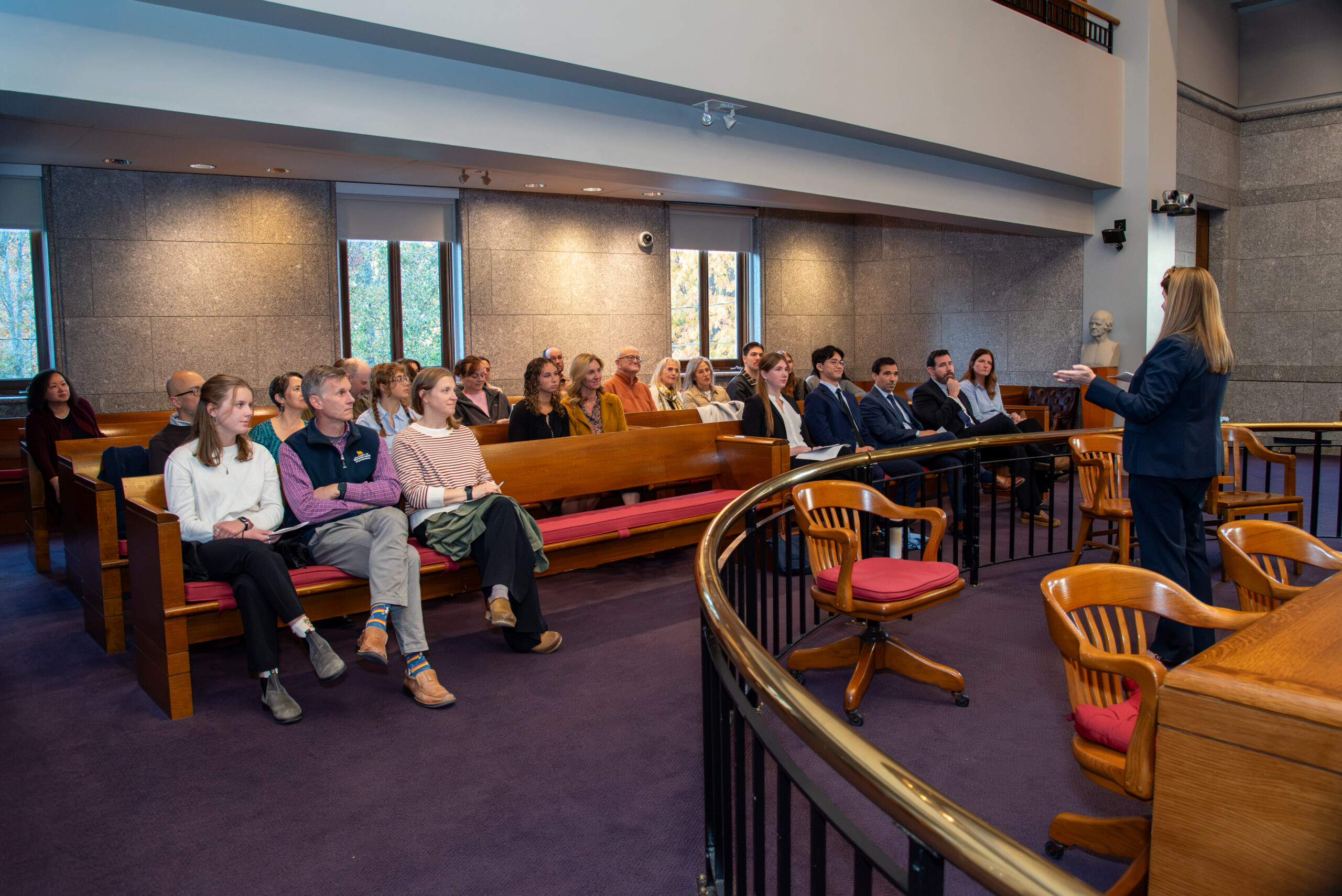
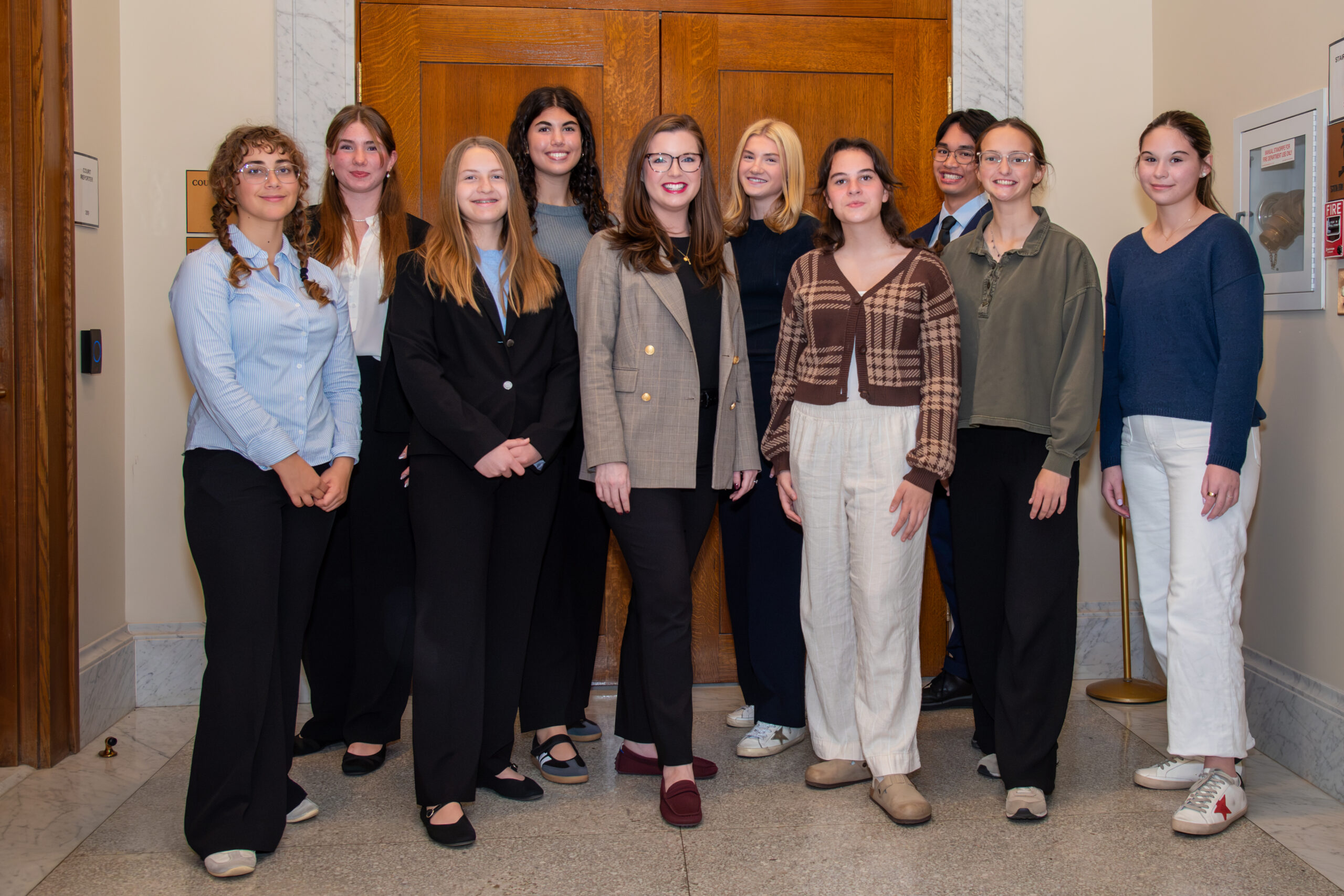
Hometowns Portland scholars with the Society’s Director of Civics Education, Nicole Maffei, at the United States v. Booker/Fanfan (2005) exhibit opening in the Edward T. Gignoux U.S. District Courthouse.
Summary of the Program
“Sentencing guidelines are SUCH an important part of any criminal sentencing and most people have no idea that they even exist. Now I understand that judges aren’t completely in power, yet can still use their discretion to sentence. I also now further understand the purpose of the jury!” -Amelia
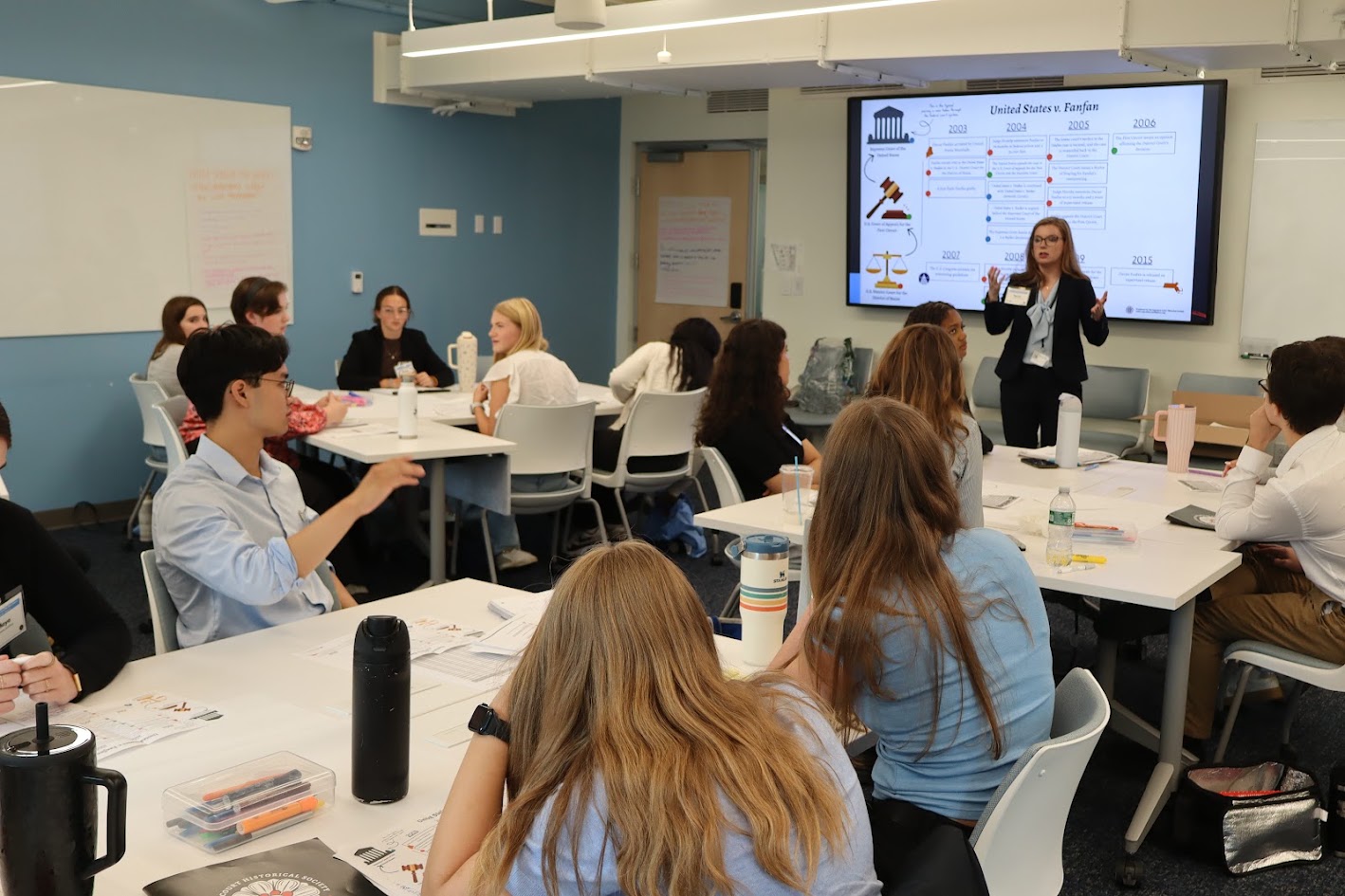
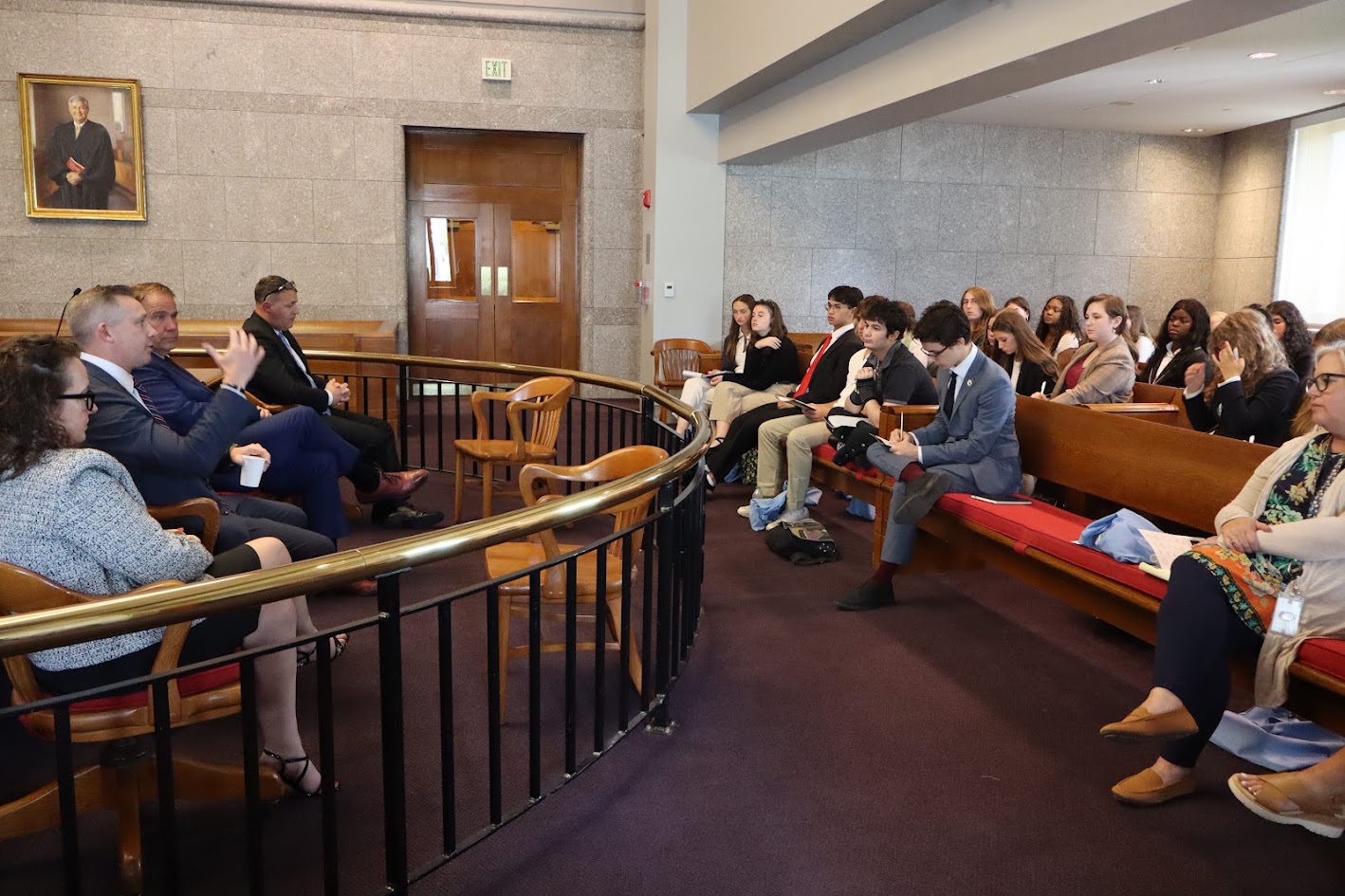
Hometowns Portland was a raving success according to the Students, Judges, Court Staff, and Speakers! 30 students from the greater Portland area gathered to study the landmark sentencing guidelines case, United States v. Booker (Fanfan) 2004. During the course of the program, students learned from:
- 5 Federal Judges (including Judge Reeves as the head of the US Sentencing Commission and Judge Calabretta speaking about his clerkship with Justice Stevens)
- The Federal Defender, Assistant FDs, and AUSAs
- Professors from the University of Maine School of Law
- Trustee and Supreme Court Appellate Advocate, John Elwood (who came in person!)
- The defendant’s actual attorney, Rosemary Scappichio
- Numerous local Attorneys
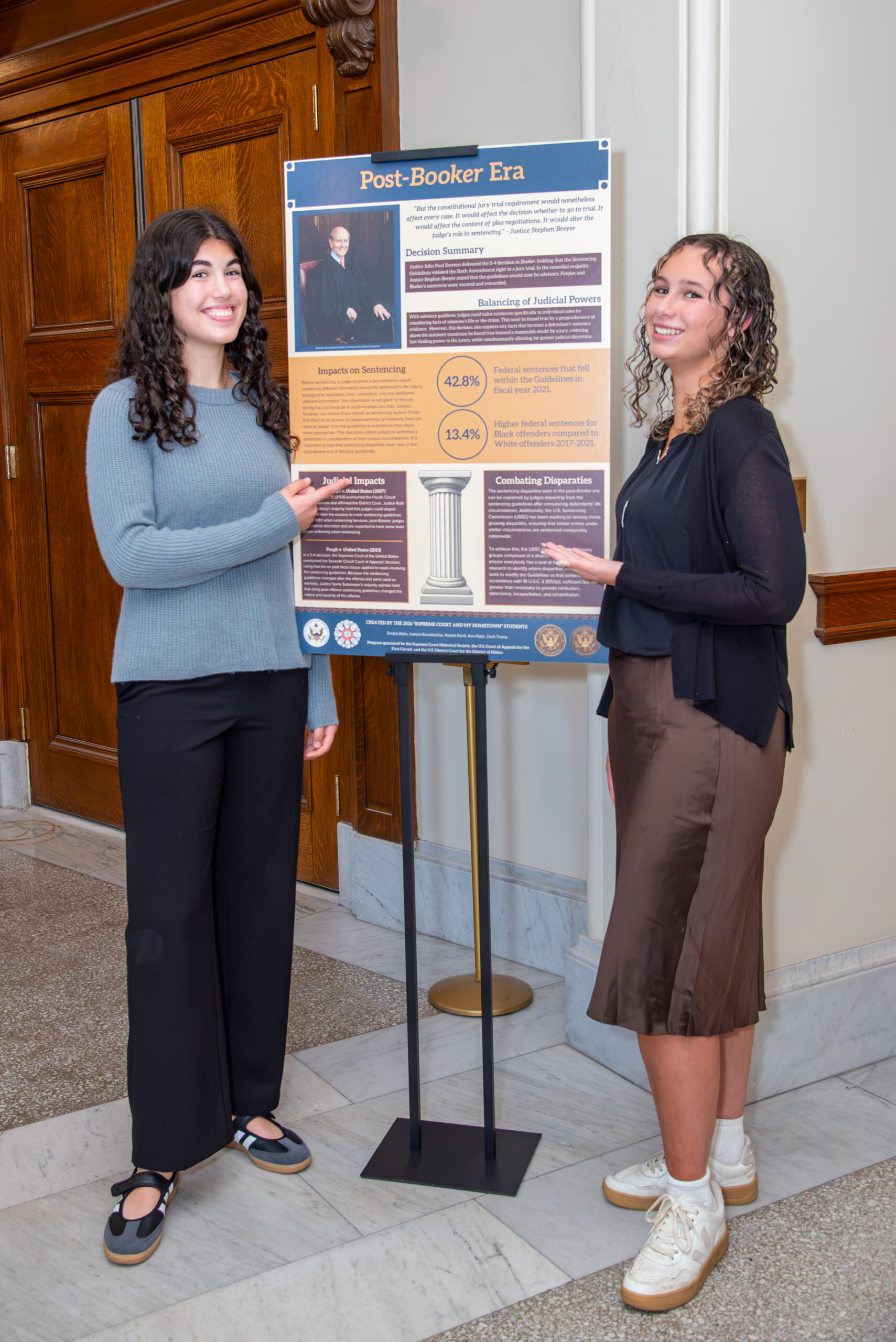
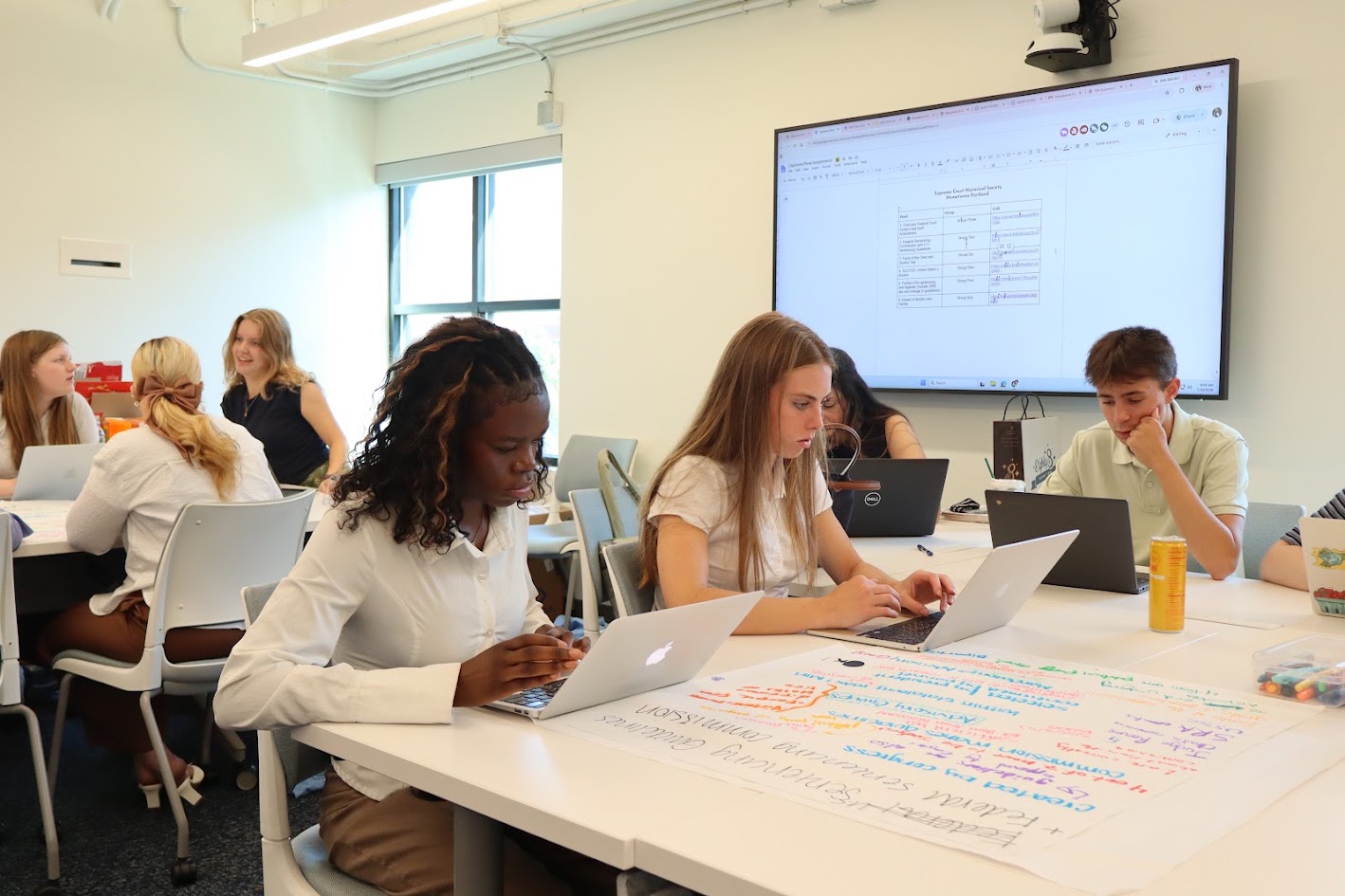
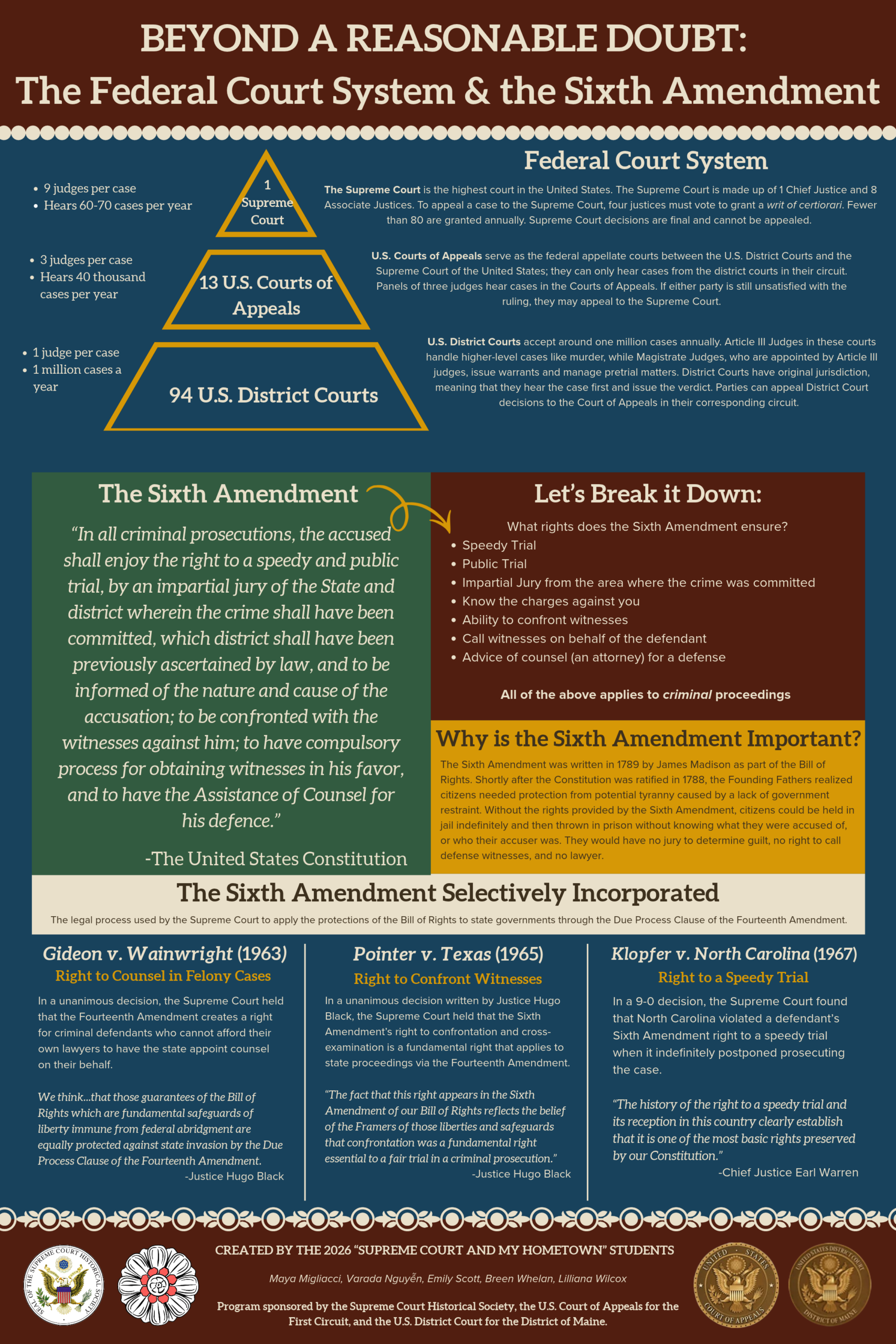
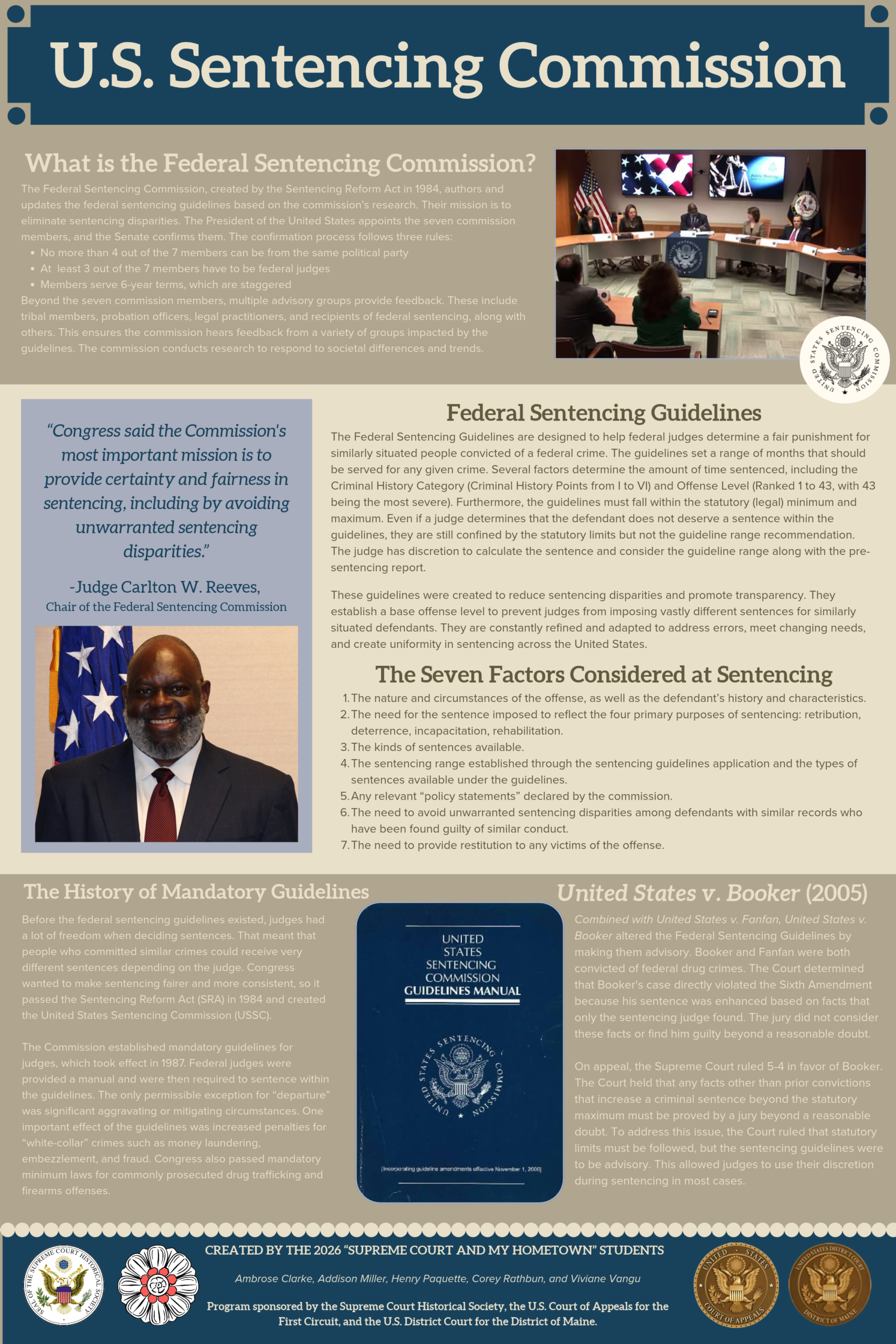
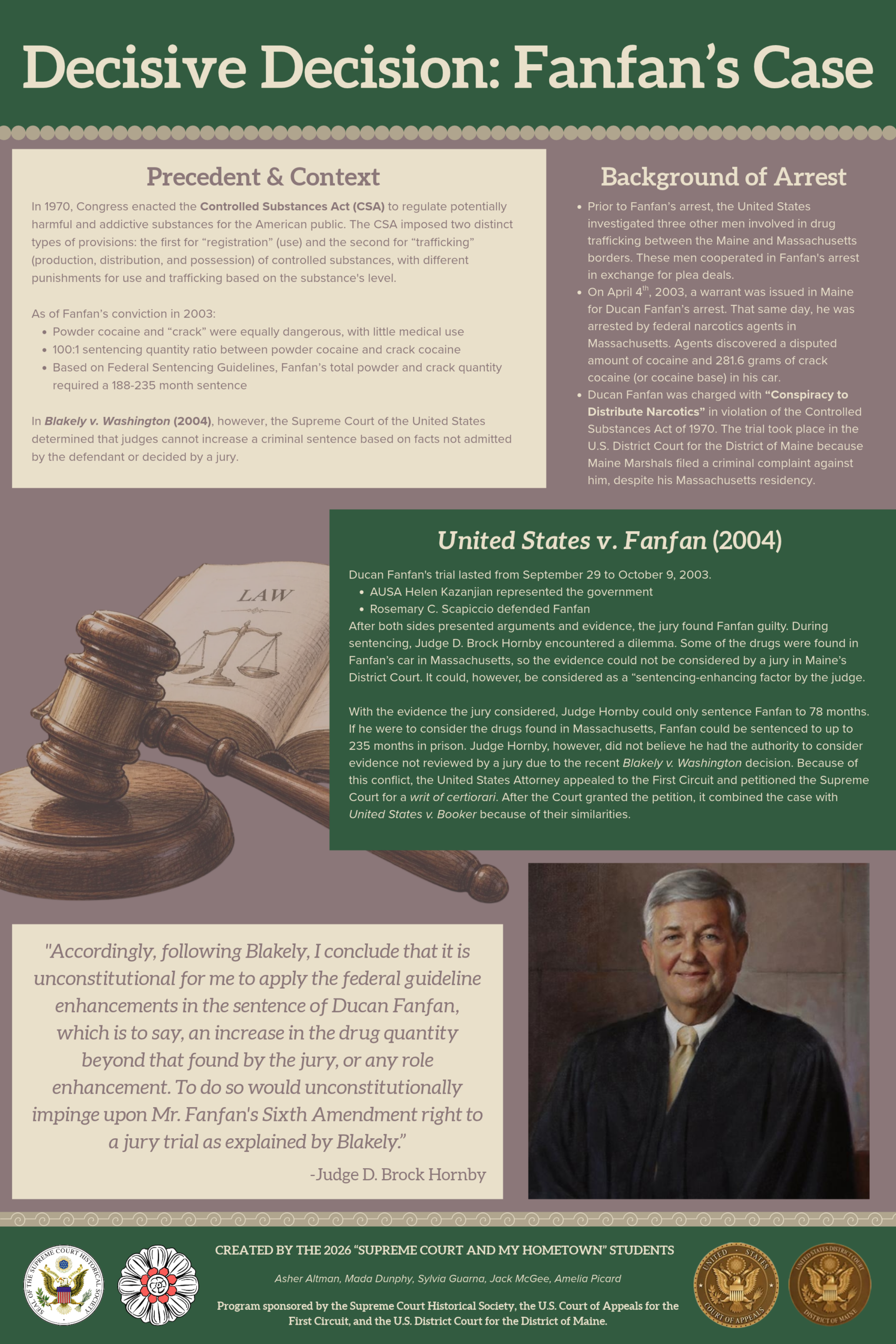
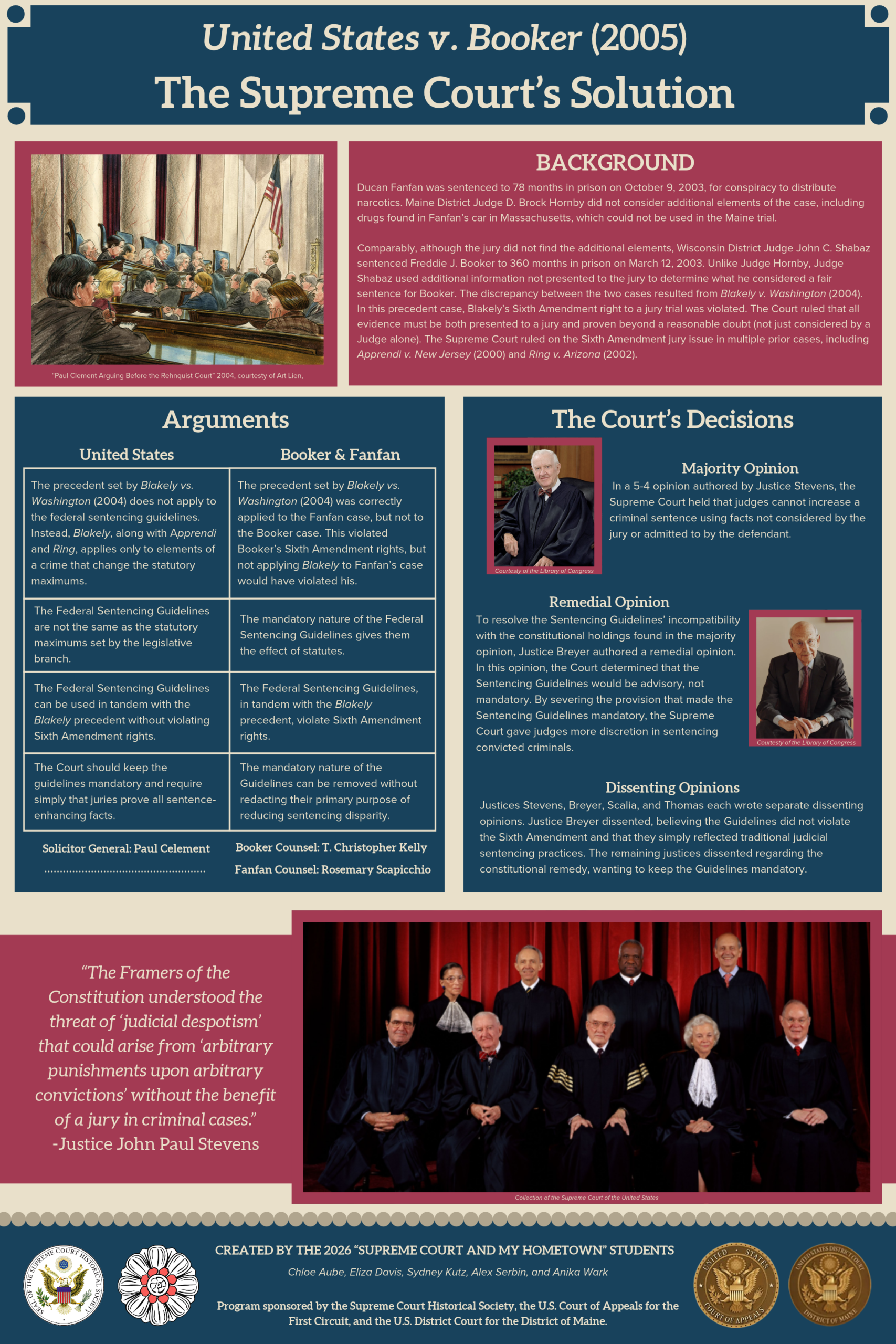
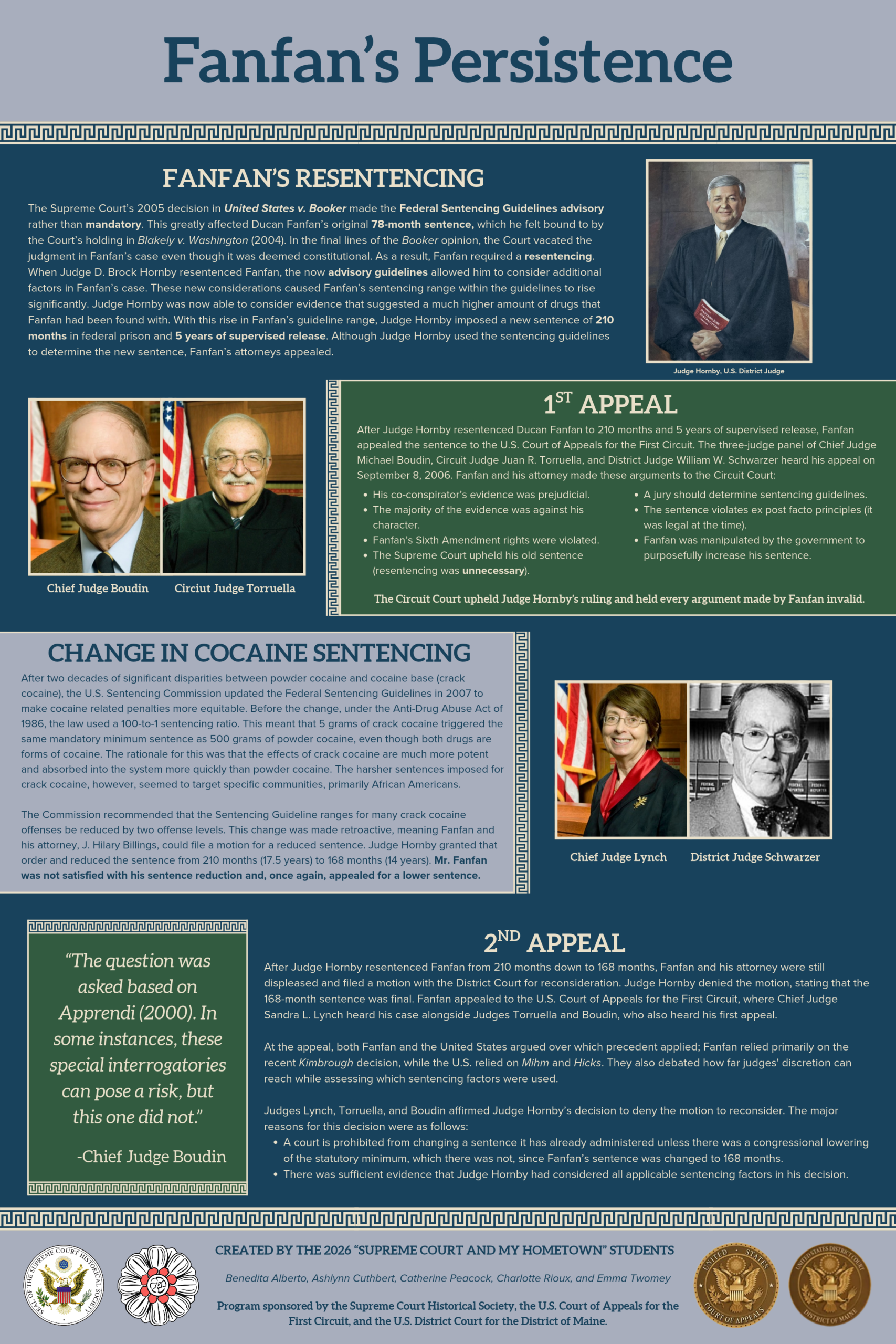
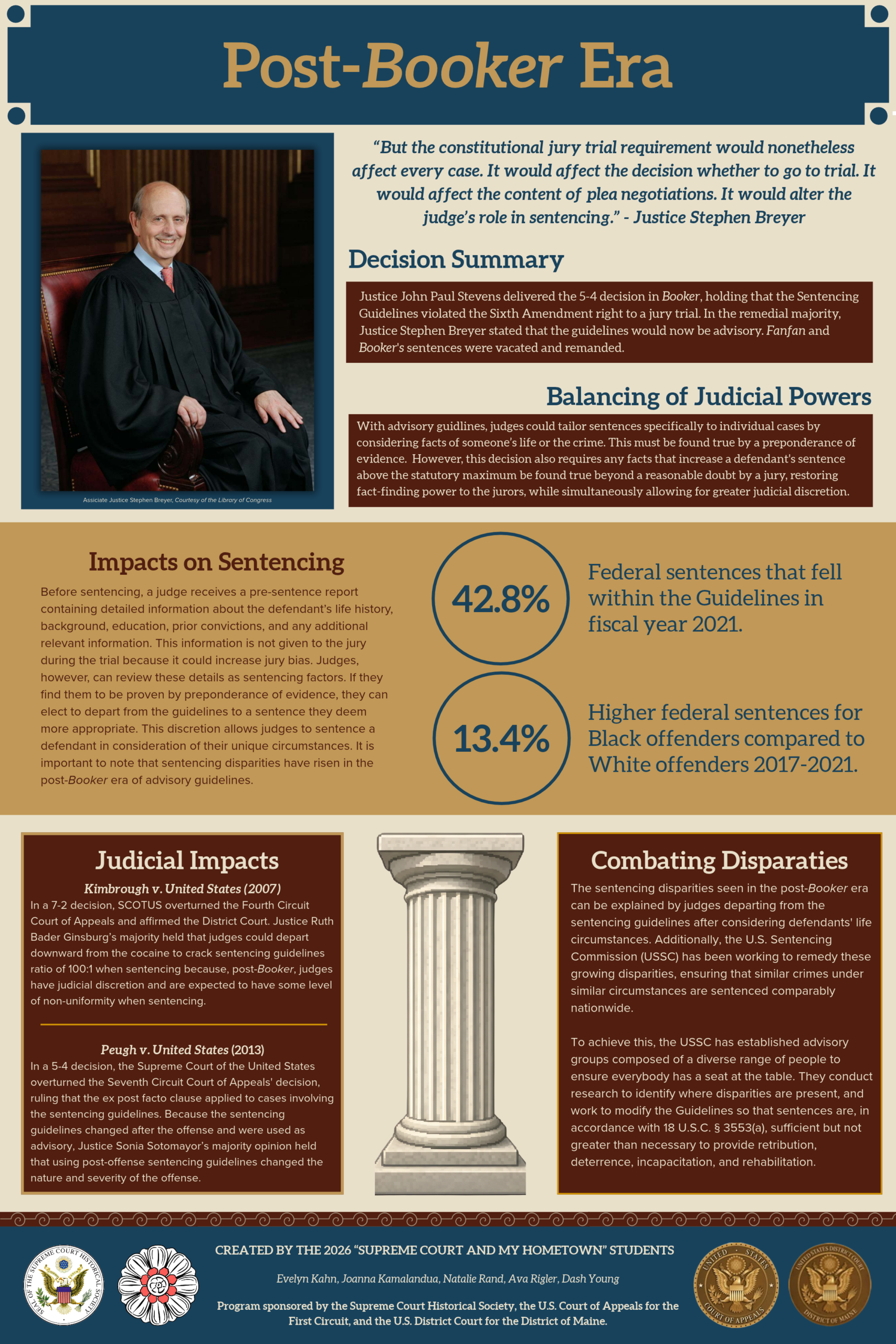
On Monday, Chief Judge Walker welcomed the students to the District of Maine, and they witnessed a live sentencing proceeding–a perfect tie into the program’s featured case. The rest of the week was filled with numerous sessions on the Sixth Amendment, the U.S. Sentencing Commission and Guidelines, federal criminal trials and appeals, and Supreme Court processes and procedures. On Thursday, the students applied their knowledge and participated in an in-depth discussion focused on the question, “Should the Sentencing Guidelines be mandatory?” Students reviewed data from the Sentencing Commission, several Law Review articles, and other publications by judges and attorneys. On the final day, the students worked on their collaborative capstone project, a six-paneled exhibit which will be displayed in the federal courthouse.
“The most valuable knowledge I gained during the program was understanding how a case moves through the federal court system and how one Supreme Court decision can affect courts across the country. I also learned the importance of the Sixth Amendment and why the right to a jury trial is such an important part of the justice system. Studying United States v. Booker and United States v. Fanfan helped me see how courts balance constitutional rights with the goal of creating fair and consistent sentences.” -Benedita
Hometowns Portland would not have been possible without the support of Chief Judge Walker, Clerk of Court Jennifer Lyons, Deputy Clerk Eric Storms, and collaborator extraordinaire, Lindsey Tully! Lindsey coordinated the speakers and made planning the program’s logistics a breeze! The Society is so grateful for the Court and community support of Hometowns Portland. The Society is returning for another Hometowns program in Summer 2029!


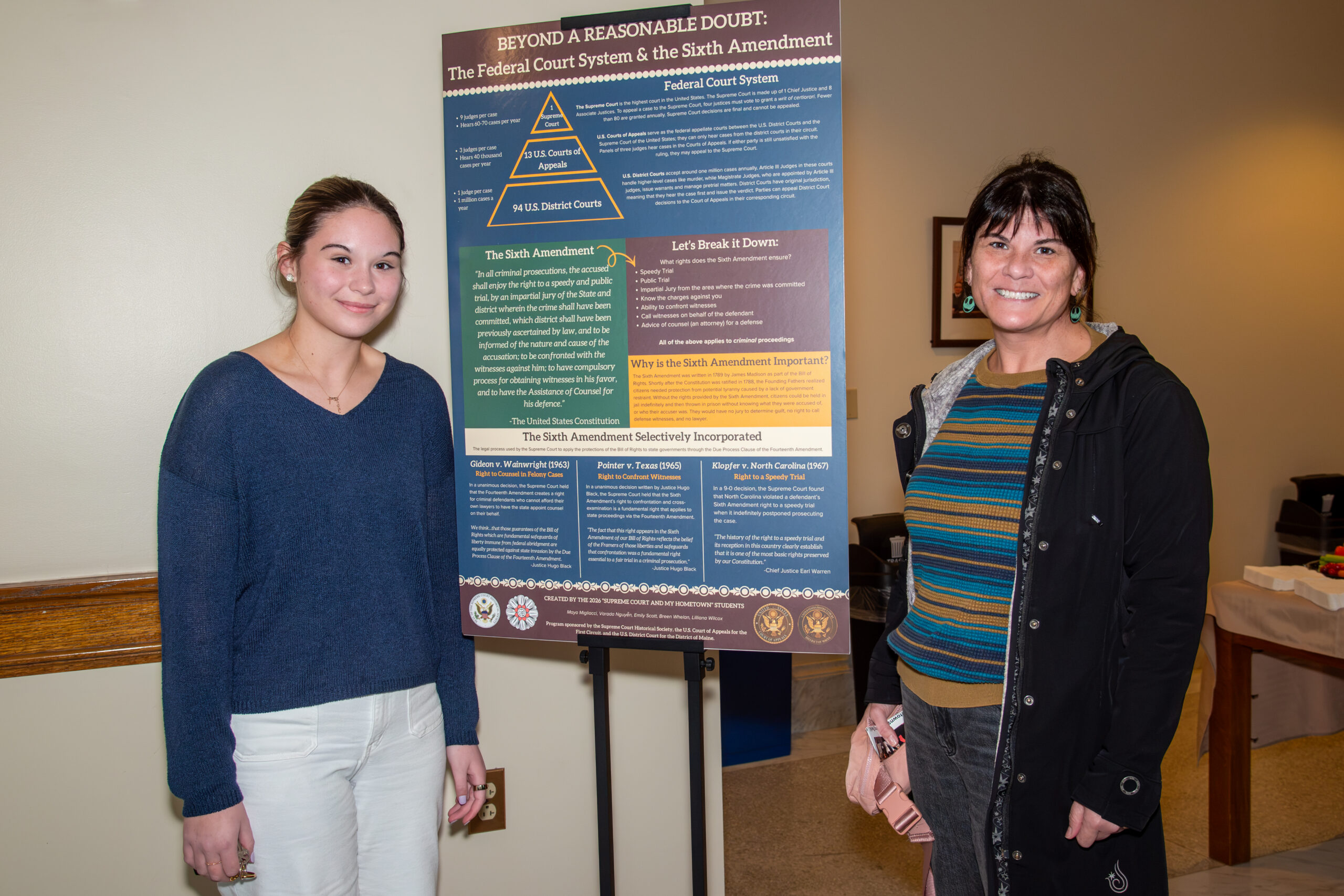
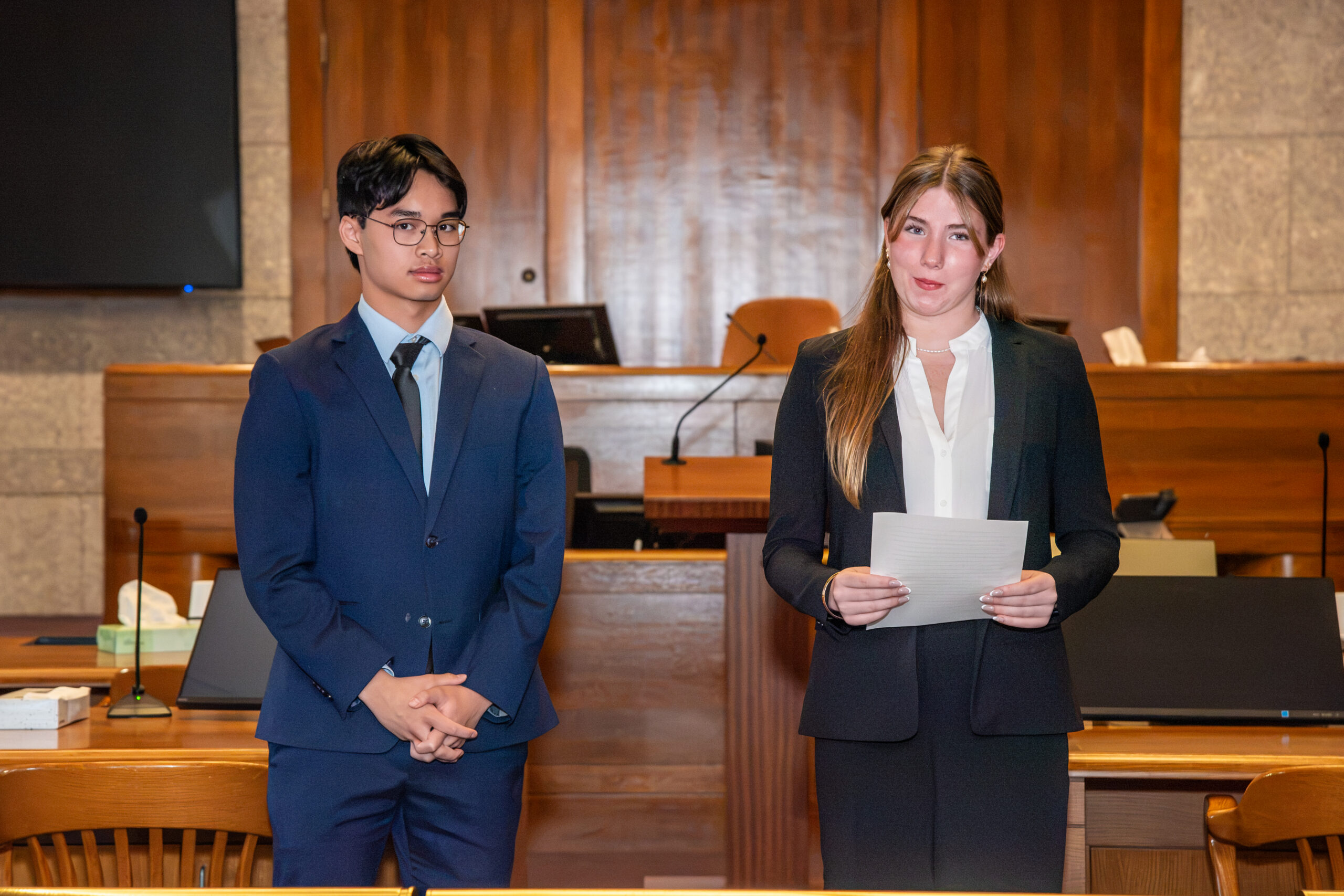
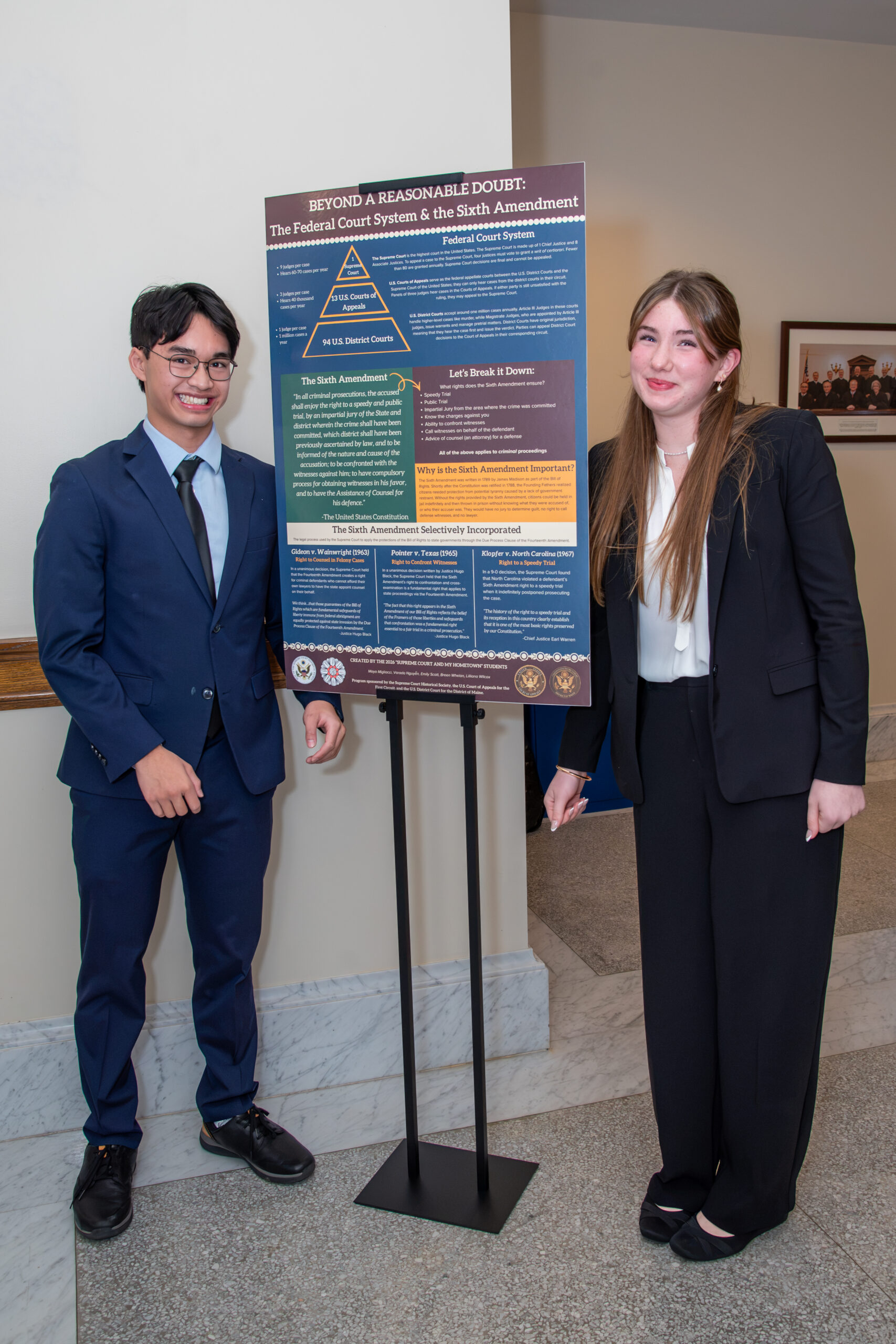
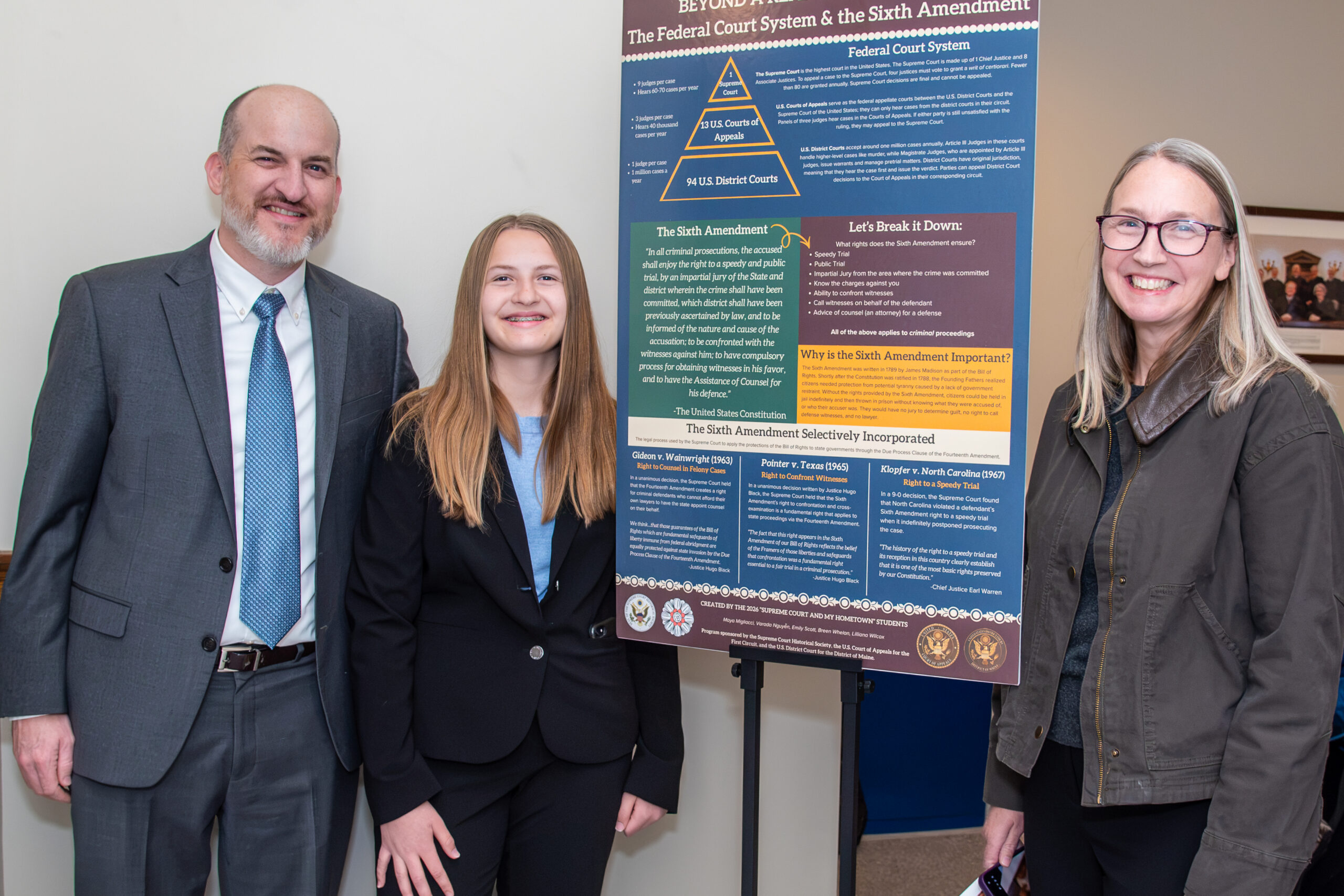
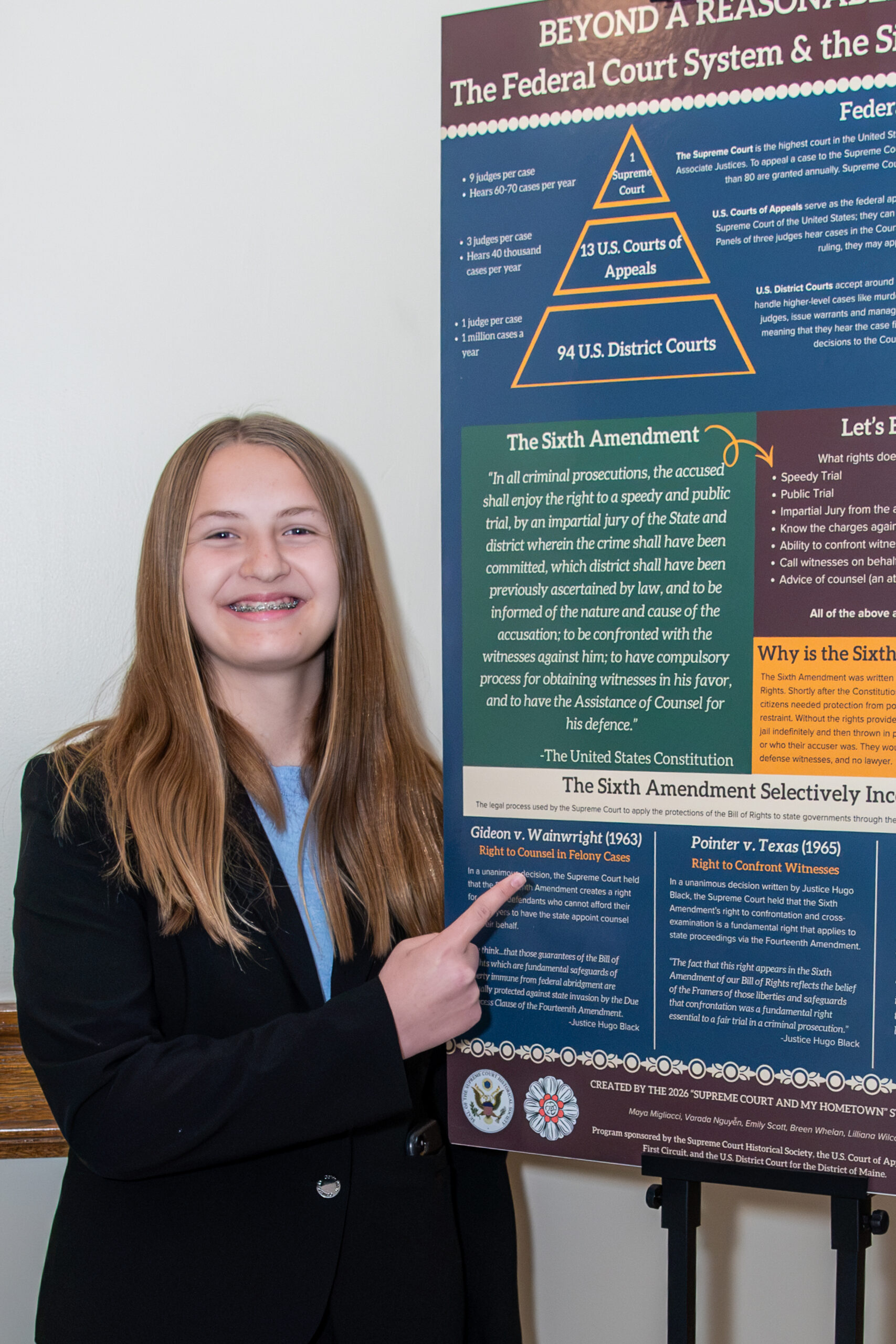
Student Capstone Project
Still have questions? We’re here to help.
Email the Civics Department – [email protected].
Email Nicole