Boston, MA

Hometowns Program

Fall 2025
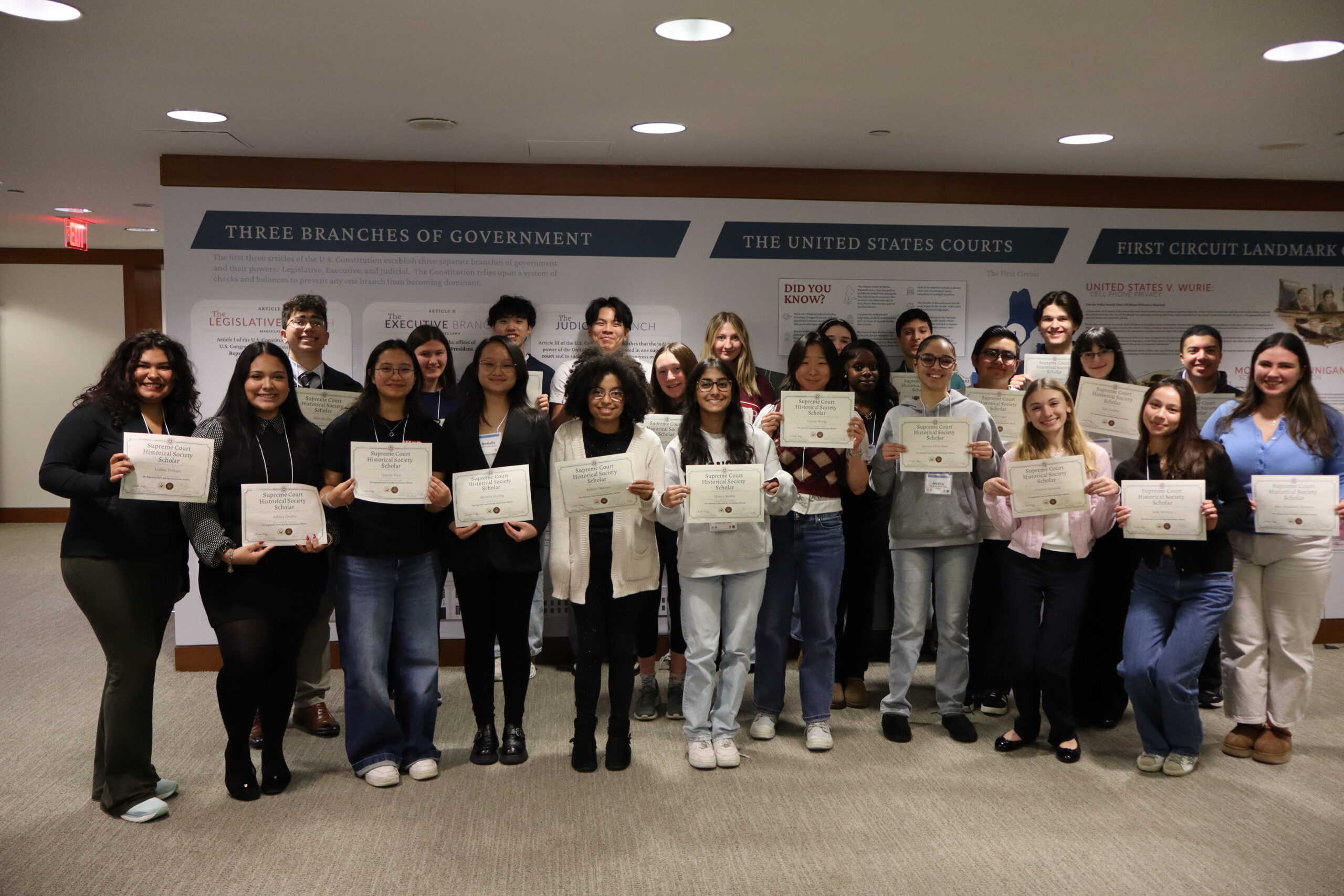
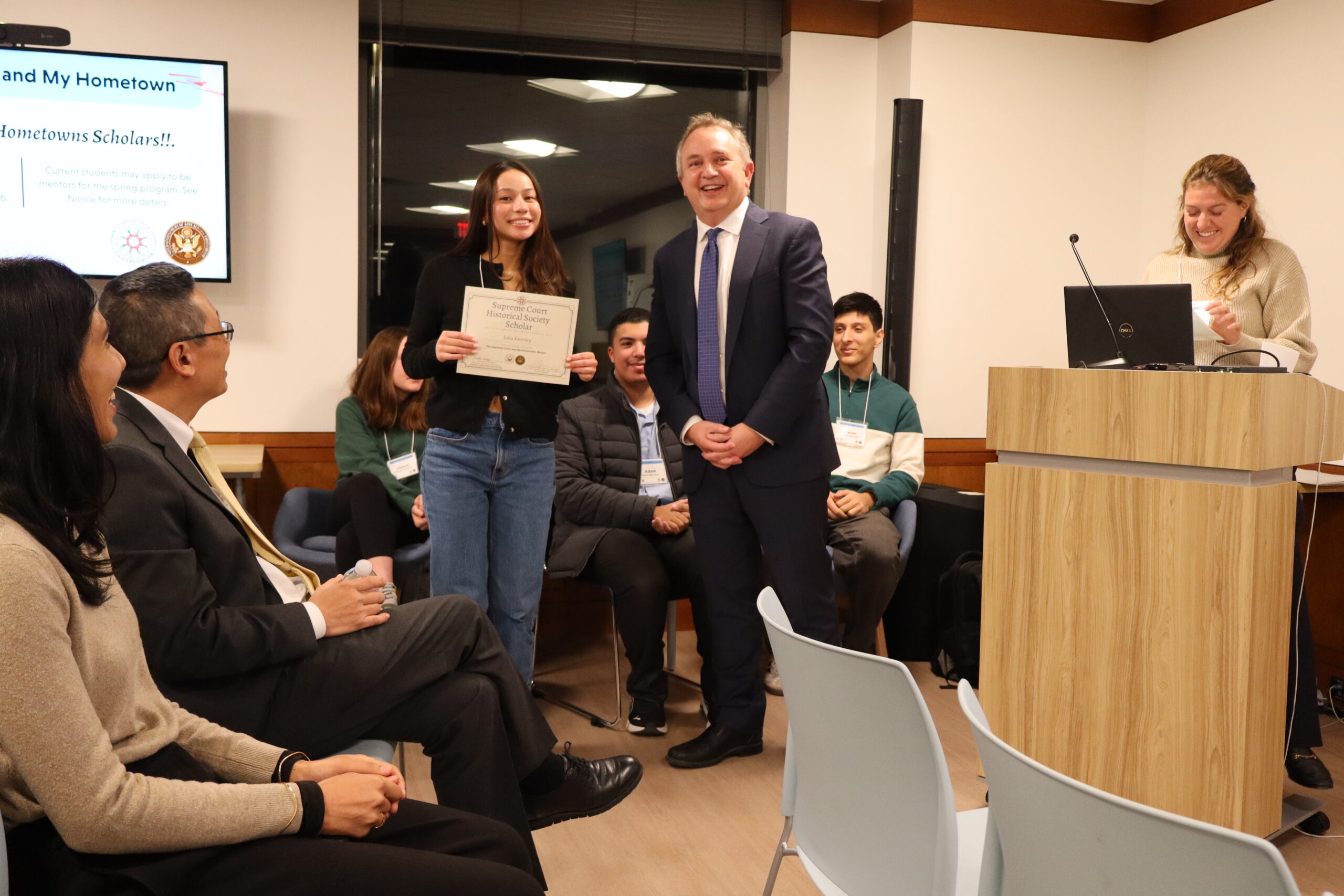
Hometowns Boston students with U.S. Court of Appeal Judge Gelpi after a session on the First Amendment.

Summary of the Program

28 students from Boston area high schools participated in Hometowns Boston over the fall semester. Students did a deep dive into the federal judiciary through the lens of the local First and Fourteenth Amendment case Smith v. Goguen (1974). Over the course of the semester, students learned from:

  • 8 Federal and state judges
  • 2 Suffolk Law School professors
  • Numerous members of the federal courthouse staff, including the Clerk of the First Circuit’s staff
  • A team of dedicated legal mentors

The moot courts were a highlight of the program. Scholars were divided into two courts, each with its own attorney team and student justices. The federal government shutdown gave us a slight hiccup; however, Chief Justice Budd of the Massachusetts Supreme Judicial Court offered the Massachusetts Supreme Court chamber and the historic Holmes courtroom as alternative locations. State Judges Ira Gant and Samir Zaganjori served as Chief Justice of each court and Society Trustee David Weinstein attended the proceedings.  As a culmination of their new knowledge, the Hometowns Scholars created a 6-panel exhibit which will be installed in the Breyer Learning Center at the John J. Moakley Federal Courthouse in Boston.

The society extends its sincere appreciation to Chief Judge Barron, Judge Aframe, and Judge Gelpi (First Circuit), as well as Judge Joun and Judge Saylor (District of Massachusetts), for providing insights into the federal court system. We would also like to recognize three of our legal mentors: Josh Segal and Mark Dickinson of Lawson and Weitzen, and federal defender Christine DeMaso. Finally, profound gratitude to Allison Guenthner, the First Circuit’s Civics Engagement Coordinator, without whom this program would not have been possible. 

The most valuable pieces of knowledge I gained from the program was a more in depth understanding of my first and fourteenth amendment rights because it is fundamental information that every U.S. citizen should know.
Jake D.
I liked doing Moot Court and being able to work with a lawyer to help us formulate our arguments. i also really liked on our first two days where we talked to the probation officer and how all of the sentencing works with both the probation officer and judges.
Mei-Elisabeth B.
For me personally I think the most valuable pieces of knowledge I learned was hearing the education it took for people to get the jobs they did. I think it was really helpful in understanding what I need to do next.
Zoe T.
For me, the most valuable pieces of knowledge I gained was genuine information and opinions from the attorneys and lawyers who came to sit at our tables during lunch. It felt very vulnerable and gave me a perspective that you don’t really get when you are just listening to them lecture.
Anna M.
“The most valuable thing I learned was how the court system actually works in real life, not just in textbooks. Seeing how judges make decisions, how lawyers argue, and how cases move through different courts helped me understand the legal world way better. I also learned that there are so many different paths you can take in law, and your college major doesn’t lock you into anything.
Mimi B.
My favorite part of the program was the moot court. Since my school doesn’t have mock trial, it was the first chance I had at doing such a hands-on activity aligned with this field, and it taught me a lot about the process.
Hasini R.
I would recommend Hometowns to classmates or friends, especially those with an interest in the law, because it was a great opportunity for me to learn the basics and learn stuff outside of what could just be researched on the internet. I got to ask real lawyers and justices questions and it gave me a more personal insight.
Charley B.

Still have questions? We’re here to help.

Email the Civics Department – [email protected]

Email Civics