Commerce
11 results-
United States v. E.C. Knight Company
Significant CaseThe Supreme Court decision that limited the federal government’s power to break up monopolies.
-
Standard Oil Company v. United States
Significant CaseThe Supreme Court decision that established the “rule of reason” in antitrust law and demonstrated the government’s power to regulate monopolies and increase competition.
-
Samuel Freeman Miller
Life StoryThe frontier physician and self-taught lawyer who helped shape the interpretation of the Reconstruction Amendments as an Associate Justice on the post-Civil War Supreme Court.
-
Rights, Commerce, and Reform
EraThe end of Reconstruction and the start of Industrialization led to a 50-year era where the Supreme Court addressed constitutional questions about rights, commerce, and reform.
-
Pollock v. Farmers’ Loan and Trust Company
Significant CaseThe Supreme Court decision that declared direct taxes on personal income unconstitutional but was nullified when Congress ratified the Sixteenth Amendment in 1913.
-
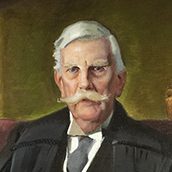
Oliver Wendell Holmes
Life StoryThe Boston native, Civil War soldier, and Associate Justice whose legal theories revolutionized modern understanding of the law.
-
Melville W. Fuller
Life StoryThe Maine-born attorney who guided the Supreme Court through industrialization preserved judicial harmony as Chief Justice .
-
Joseph P. Bradley
Life StoryThe Supreme Court Justice who held the deciding vote on the Electoral Commission for the presidential election of 1876.
-
John Marshall Harlan
Life StoryA Kentucky lawyer and politician who fought for the Union Army and became Associate Justice of the Supreme Court and a voice for “equal protection” for U.S. citizens.
-
Edward Douglass White Jr.
Life StoryThe first Associate Justice to become the Chief Justice of the United States.