Bethel School District No. 403 v. Fraser (1986)
Significant Case
The Supreme Court case that clarified the application of the First Amendment freedom of speech in public schools.
Background
In December 1965, three students in Des Moines, Iowa, planned to protest the Vietnam War by silently wearing black armbands to school. The school administration heard about the plan and forbade the protest, warning students they would be suspended if they participated. Mary Beth Tinker, John Tinker, and Christopher Eckhardt wore the armbands anyway and, as promised, the school sent them home. In response, the students’ families sued the school district for violations of their First Amendment freedom of speech. In 1968, the case reached the Supreme Court of the United States on appeal from the U.S. Court of Appeals for the 8th Circuit. The next year, the Court held in a 7-2 decision that the school suspensions were unconstitutional, as students and teachers do not “shed their constitutional rights to freedom of speech or expression at the schoolhouse gate.” According to the Court, schools must prove that suppressed student speech “materially and substantially interferes” with the educational environment. Tinker v. Des Moines became a landmark precedent case for the treatment of free speech in schools.
Facts
On April 26, 1983, Matthew Fraser delivered a minute-long speech at a school-sponsored assembly to nominate a classmate for student body vice president at Bethel High School in Spanaway, Washington. Before the assembly, two teachers warned Fraser that he could face “severe consequences” for giving the speech, which described the candidate using graphic sexual metaphors. Fraser delivered the speech anyway, and his candidate won the election with 90 percent of the vote. Consequently, the Assistant Principal told Fraser he violated a school rule that prohibited any conduct that interferes with the educational process, including obscene language. The school suspended Fraser for three days and banned him from being considered as the graduation speaker. As a two-time recipient of the debate team state championship’s “Top Speaker” award, Fraser was the top contender for that role. He appealed his punishment to the school district. The hearing officer determined Fraser’s “indecent, lewd” speech fell within the ordinary meaning of “obscene,” upholding the suspension.
Fraser’s family brought his case to the U.S. District Court for the Western District of Washington, claiming the school violated his First Amendment right to free speech. The District Court ruled in his favor, holding the school rule was “unconstitutionally vague and overbroad.” Furthermore, the court held the school violated Fraser’s Fourteenth Amendment right to Due Process when it disqualified him as a potential graduation speaker “because the disciplinary rule makes no mention of such removal as a possible sanction.” The ruling awarded Fraser monetary damages and allowed him to speak at graduation after his peers elected him by write-in vote. The Court of Appeals for the Ninth Circuit cited Tinker when it affirmed the District Court decision. Bethel School District appealed the Ninth Circuit holding and the Supreme Court of the United States heard the case on March 3, 1986.
Issue
Does the First Amendment prevent a school district from disciplining a high school student for giving an “offensively lewd and indecent” speech at a school-sponsored assembly?
Summary
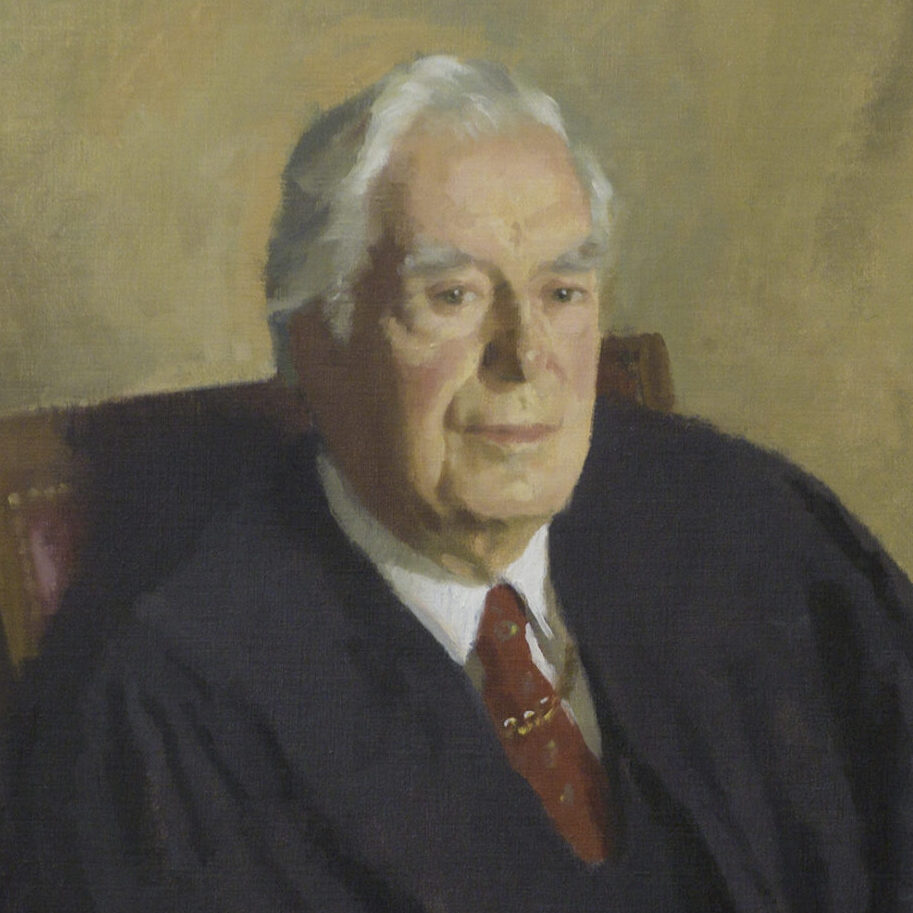
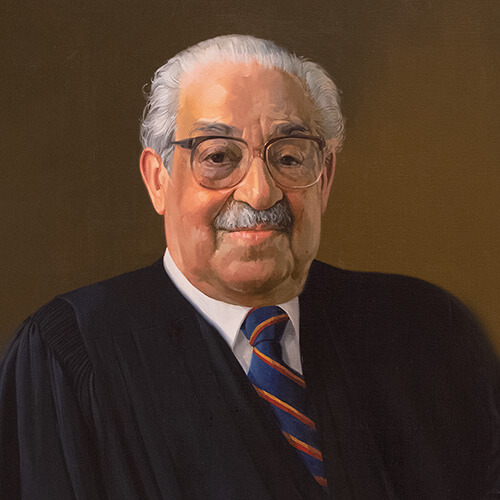
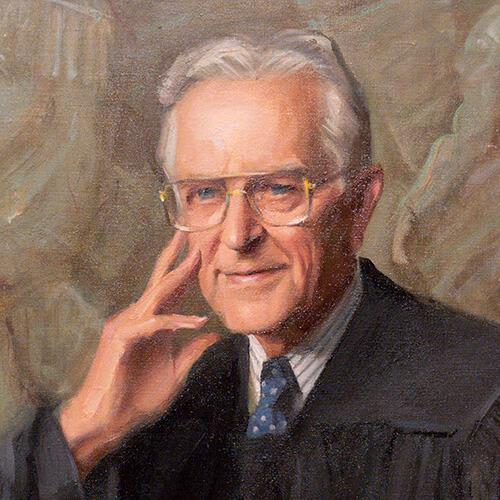
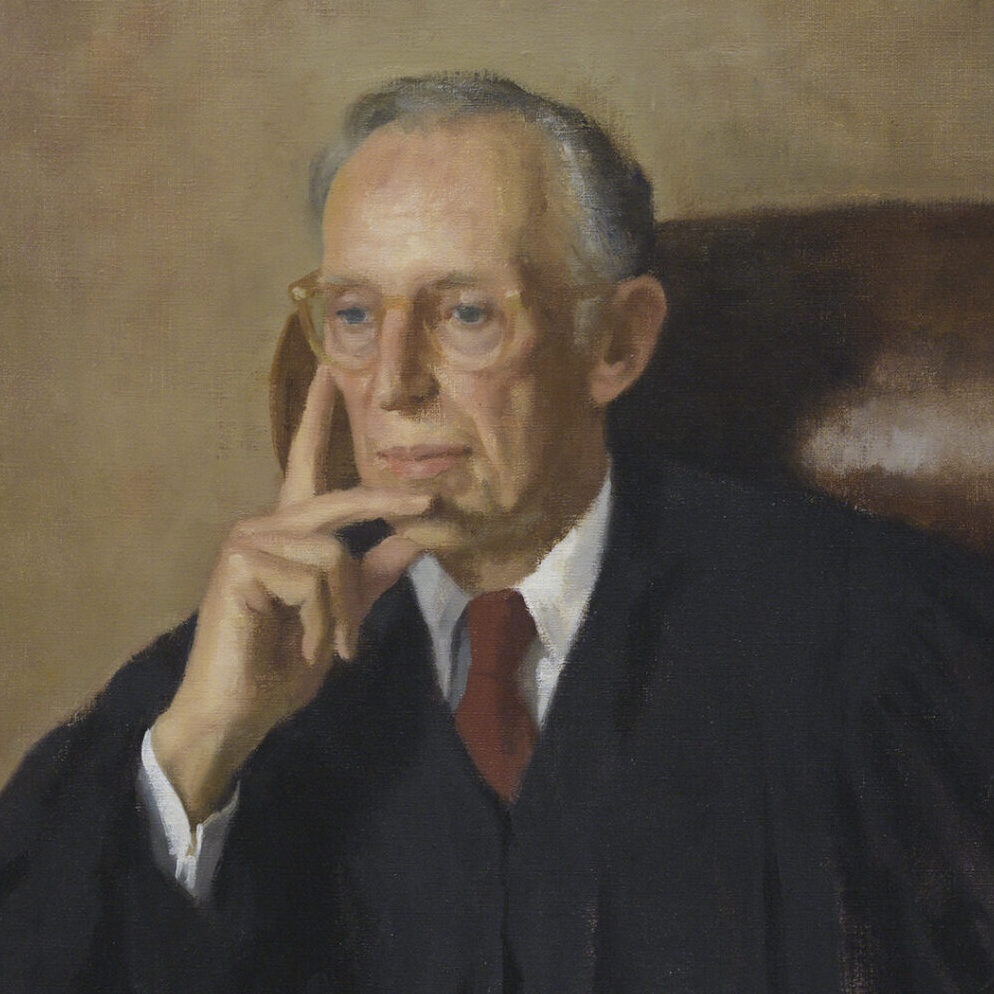
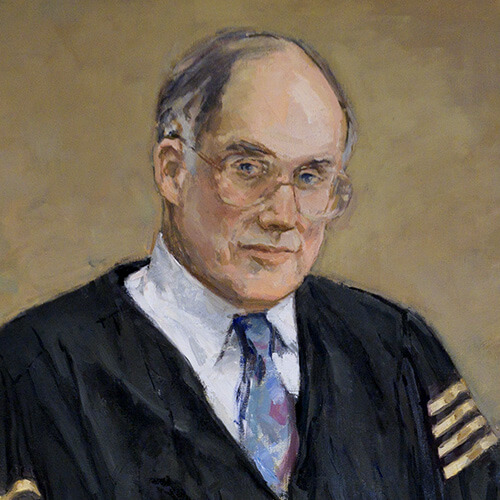
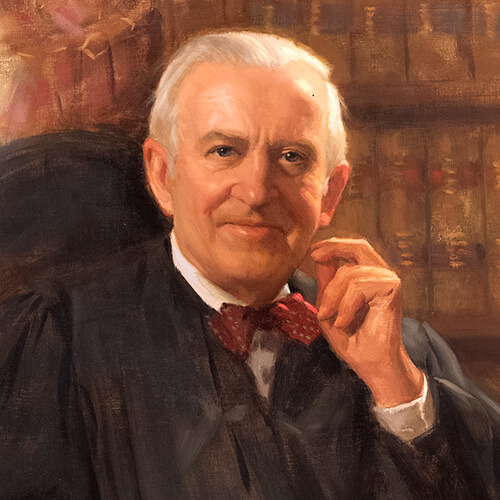
In a 7-2 decision, the Court reversed the lower courts’ decisions and held that the First Amendment allows a school district to discipline lewd and vulgar speech. Chief Justice Warren Burger wrote for the majority, concluding that vulgar speech was “inconsistent with the fundamental values of public school education” and that restricting students from using such language in school did not violate the First Amendment. The Court further distinguished Fraser’s case from previous rulings, describing “the marked distinction between the political ‘message’ of the armbands in Tinker and the sexual content of respondent’s speech in this case.” Additionally, the majority noted that “Senators have been censured for abusive language directed at other Senators,” strengthening the holding that school officials can regulate offensive student speech. Justices Thurgood Marshall and John Paul Stevens dissented in the case. Justice Marshall argued that “the School District failed to demonstrate that the respondent’s remarks were indeed disruptive,” as required by the Tinker precedent. Justice Stevens, on the other hand, questioned whether a “group of judges who are at least two generations and 3,000 miles away from the scene of the crime” were in the best position to determine what would offend Fraser’s audience.
Precedent Set
The Bethel decision affirmed public schools’ ability to limit lewd and indecent speech to preserve safe educational environments. The Court applied a similar interpretation two years later in Hazelwood School District v. Kuhlmeier (1988), a case involving censorship of high school newspapers. The majority cited Bethel, saying the “constitutional rights of students in public school are not automatically coextensive with the rights of adults in other settings.” As a result, school-sponsored newspapers may be reviewed and, in some cases, censored by school administrators the same way Bethel limited speech. While the lower court decisions in Bethel and Hazelwood relied heavily on the precedent set by Tinker, the Supreme Court holdings narrowed Tinker without overturning it.
Additional Context
Since the mid-1900s, the Court has considered how to preserve a safe and productive learning environment in schools while clarifying student protections under the Bill of Rights. Before Tinker, Bethel, and Hazelwood, the landmark decision in West Virginia State Board of Education v. Barnette (1943) laid a foundation for evaluating free speech in schools. In that case, the Supreme Court struck down a state law that required all public school students to salute the American flag in a daily classroom routine, noting that “remaining passive during a flag salute ritual” does not create “clear and present danger.” More recently, in Morse v. Frederick (2007), the Court found that school leadership can prohibit student speech which promotes illegal drug use. Citing both Bethel and Hazelwood as precedent, the majority affirmed “that schools may take steps to safeguard those entrusted to their care from speech that can reasonably be regarded as encouraging illegal drug use.” As seen in Bethel, the decision focused on balancing student rights with a safe educational setting.
Decision
In a 7-2 decision, the Court reversed the lower courts’ decisions and held that the First Amendment allows a school district to discipline lewd and vulgar speech.
- Majority
- Concurring
- Dissenting
- Recusal
-
Burger
-
Brennan
-
White
-
Marshall
-
Blackmun
-
Powell
-
Rehnquist
-
Stevens
-
Day O’Connor

-
Majority Opinion
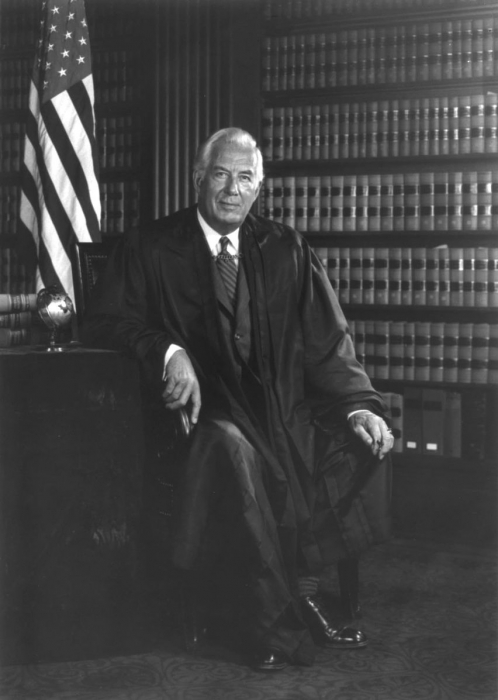
Warren E. BurgerRead More Close“We hold that petitioner School District acted entirely within its permissible authority in imposing sanctions upon Fraser in response to his offensively lewd and indecent speech. Unlike the sanctions imposed on the students wearing armbands in Tinker, the penalties imposed in this case were unrelated to any political viewpoint. The First Amendment does not prevent the school officials from determining that to permit a vulgar and lewd speech such as respondent’s would undermine the school’s basic educational mission. A high school assembly or classroom is no place for a sexually explicit monologue directed towards an unsuspecting audience of teenage students.”
-
Dissenting Opinion
John Paul StevensRead More Close“This respondent was an outstanding young man with a fine academic record. The fact that he was chosen by the student body to speak at the school’s commencement exercises demonstrates that he was respected by his peers. This fact is relevant for two reasons. It confirms the conclusion that the discipline imposed on him–a 3-day suspension and ineligibility to speak at the school’s graduation exercises–\was sufficiently serious to justify invocation of the School District’s grievance procedures. More importantly, it indicates that he was probably in a better position to determine whether an audience composed of 600 of his contemporaries would be offended by the use of a four-letter word — or a sexual metaphor — than is a group of judges who are at least two generations and 3,000 miles away from the scene of the crime.”
Discussion Questions
- Explain the precedent set by Tinker v. Des Moines.
- Describe the difference in the Court’s interpretation of student expression in Tinker and Bethel. Why was Tinker’s speech protected, while Fraser’s was limited?
- How did the Court’s interpretation of the application of the First Amendment in school settings change over time?
- How is the effort to balance social order with individual freedom reflected in the Bethel decision?
- How does Justice Stevens’ dissent challenge the Supreme Court’s role in reviewing student speech cases?
- The Supreme Court held in Bethel and subsequent cases that students’ constitutional rights are limited within a school setting because schools have a responsibility to maintain a safe and productive learning environment. As a student, how does this make you feel?
Extension Activity
Read the case summary for Tinker v. Des Moines and respond to the following AP-style prompt.
-
Identify the constitutional clause that is common to both Tinker v. Des Moines (1969) and Bethel v. Fraser (1986).
-
Explain how the facts in Tinker v. Des Moines and Bethel v. Fraser led to different holdings.
-
Explain how the holding in Bethel v. Fraser affects the concept of individual rights.
Sources
Special thanks to legal scholar and professor Lisa Hoppenjans for her review, feedback, and additional information.
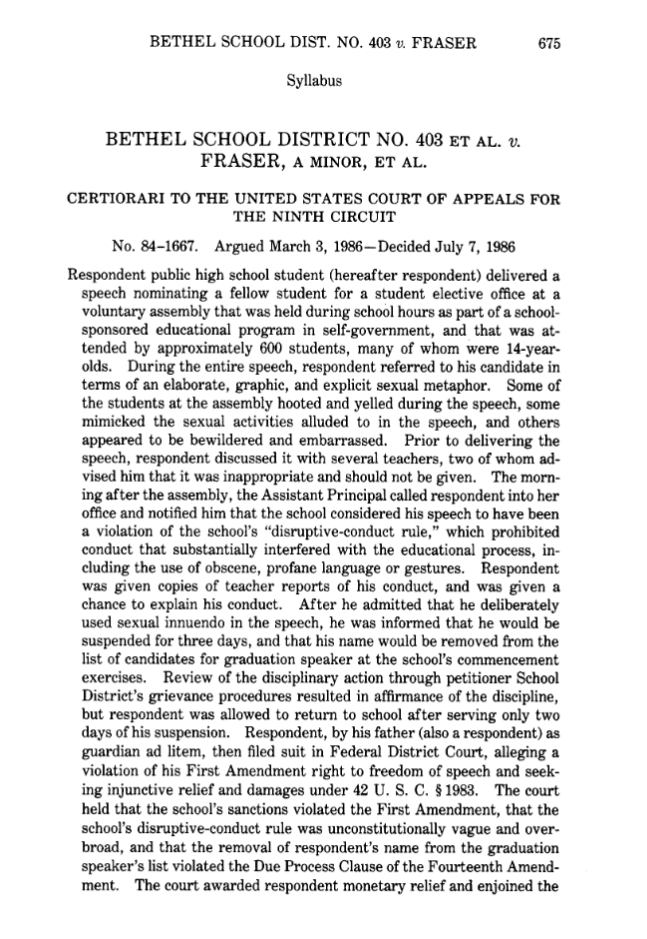
Featured image: Burger, Warren Earl, and Supreme Court Of The United States. U.S. Reports: Bethel School Dist. No. 403 v. Fraser, 478 U.S. 675. 1985. Periodical. https://www.loc.gov/item/usrep478675/.
Bartlett, Larry D. “The Closing of the Schoolhouse Gate on Student Speech: An Irony and an Opportunity on the 200th Anniversary of the Bill of Rights.” The High School Journal 76, no. 1 (1992): 30–39. http://www.jstor.org/stable/40364568.
Bethel School District No. 403 v. Fraser (1986) 478 U.S. 675
“Bethel School District No. 403 v. Fraser.” Oyez. Accessed April 21, 2026. https://www.oyez.org/cases/1985/84-1667.
Dever, James C. “Tinker Revisited: Fraser v. Bethel School District and Regulation of Speech in the Public Schools.” Duke Law Journal 1985, no. 6 (1985): 1164–93. https://doi.org/10.2307/1372407.
Fraser v. Bethel School District No. 403 (1985) 755 F.2d 1356 (9th Circuit)
New Jersey v. T.L.O. (1985) 469 U.S. 325
Raskin, Jamin B. “Student Speech: The Enduring Greatness of ‘Tinker.’” Human Rights 35, no. 3 (2008): 2–5. http://www.jstor.org/stable/41223312.
Tinker v. Des Moines Independent School District (1969) 393 U.S. 503
West Virginia State Board of Education v. Barnette (1943) 319 U.S. 624