Noah Parden
Life Story: 1865-1944
The story of a Black attorney who risked his own safety defending Ed Johnson and, in doing so, helped to reshape the constitutional protections of people accused of crimes.
Background
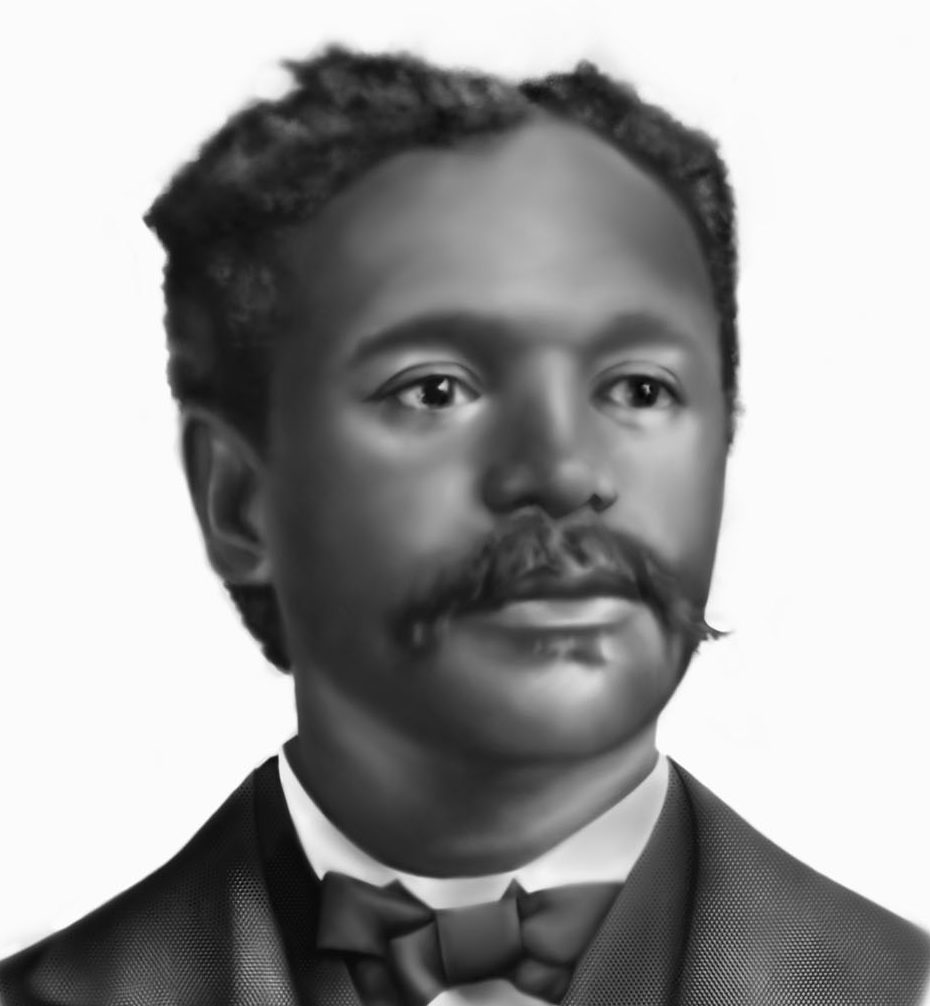
Noah W. Parden was born around 1865 to a formerly enslaved woman in Floyd County, Georgia. When Noah was 6, his mother died and he was sent to live at a rural orphanage run by Christian missionaries. Noah moved to Chattanooga, Tennessee as a teenager. He worked to support himself while attending Howard High School, the first public school in the Chattanooga area for Black students.
After graduating in 1890, Noah moved to Nashville to study at Central Tennessee College. He worked as a barber to pay his tuition. During this time period, most aspiring lawyers did not attend law school. Rather they completed a three- to four- year apprenticeship program with an attorney to receive their law licenses. Noah’s formal education resulted in a deeper understanding of laws and case precedent than most of his attorney colleagues. While in law school, Noah met and married Mattie S. Broyles. The couple had two children, Frank and Lucy. A devout Christian, Noah attended church weekly and prayed daily. Booker T. Washington’s teachings influenced Noah throughout his life. Washington encouraged Black Americans to pursue trades and skills believing that economic contributions would eventually lead to societal equality.
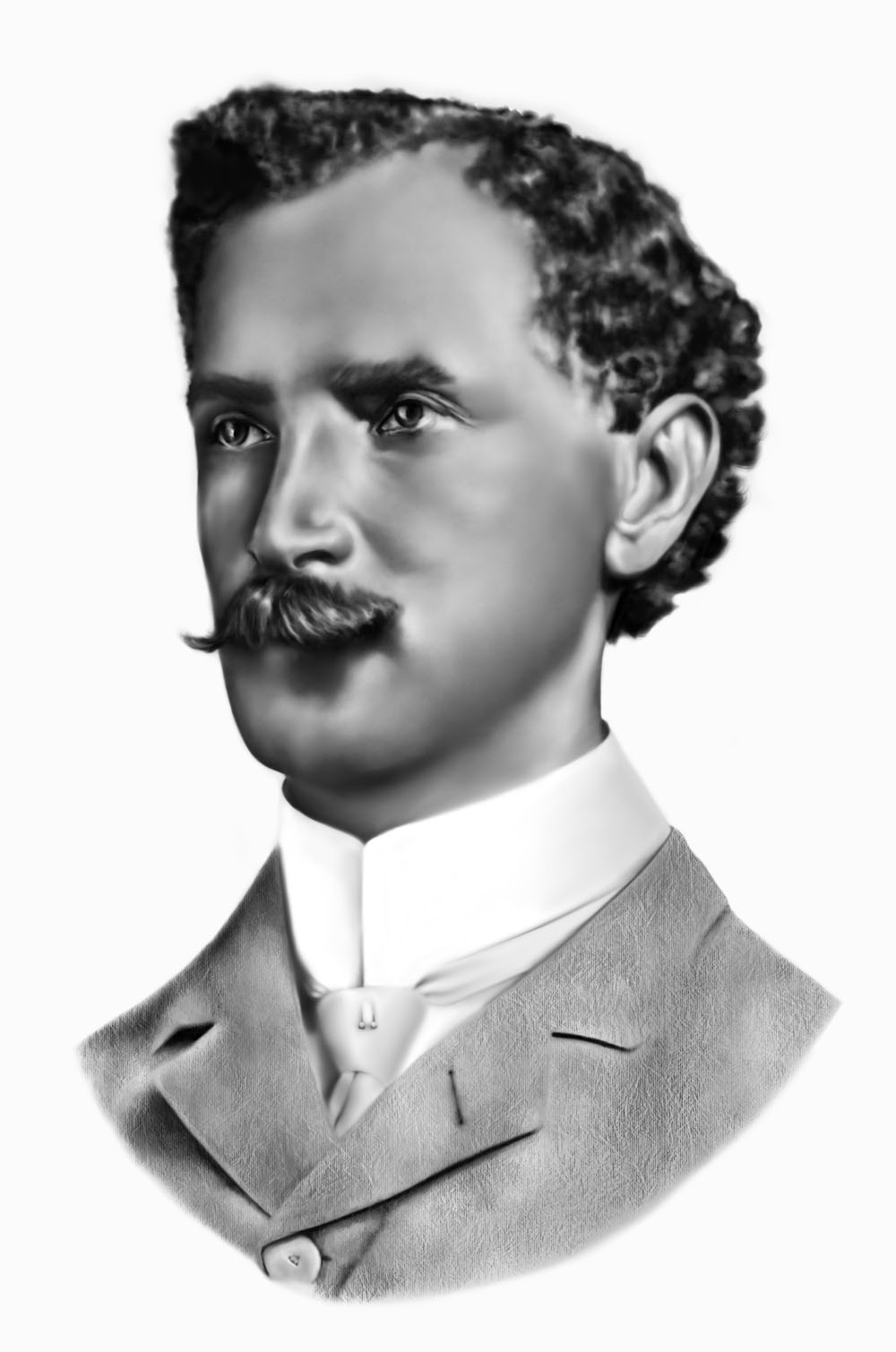
In 1892, Parden graduated from law school at the top of his class. He returned to Chattanooga with his family to open his law practice. Over the next decade, joined the law practice of prominent Black attorney Styles L. Hutchins as a partner and he established himself as a successful lawyer in Chattanooga. The majority of Black litigants in the area hired Parden and Hutchins to represent them.
Parden’s most significant courtroom victories were in civil cases against insurance companies. In those days, insurance companies frequently sold policies to Black families and Black-owned businesses, but then denied claims they filed. Parden developed a strategy to combat their discriminatory policies by appealing to the all-white juries’ self-interest. He argued that if insurance companies were allowed to take advantage of their Black customers, they could do the same to their white customers. Parden’s legal methods were so successful that he used the money from his civil cases to work the majority of his criminal cases pro bono.
The Ed Johnson Case and U.S. v. Shipp
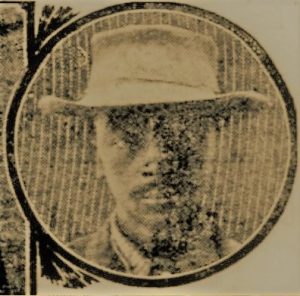
Noah litigated a historic local case that led to the Supreme Court’s first and only case in which it sat as a criminal trial court. In 1906, civil unrest spread throughout Chattanooga after Ed Johnson, a local Black man, was accused of raping a 21-year-old white woman. A county judge appointed three local, white attorneys to defend Johnson. One of the attorneys, Lewis Shepherd, whom Noah admired, was a former judge who fought against racially biased laws. Shepherd asked Noah to join the defense team, but out of fear for his own safety, Noah declined. He nonetheless quietly assisted Shepherd in finding and interviewing Johnson’s alibi witnesses.
After a rushed trial, filled with circumstantial evidence and questionable testimony, Ed Johnson was sentenced to death. A few hours later, Johnson’s father visited Noah at his office. He pleaded with Noah to appeal his son’s case. As Noah listened to Johnson’s father, his law partner, Styles Hutchins, overheard the conversation. While Noah followed Booker T. Washington and his deliberate, economics-based approach to civil rights, Hutchins was a follower of a different civil rights leader: W.E.B. DuBois. DuBois believed in pushing for immediate freedom and equality for all Black Americans. Washington and DuBois used different civil rights strategies with a shared goal of equal rights for Black Americans, much like how Noah and his law partner had contrasting legal approaches with the same goal of justice for their clients. After Johnson’s father left, Hutchins urged Noah to take the case. The two men discussed the ramifications for hours before Noah agreed they should represent Johnson for his appeal.
Noah and Hutchins tirelessly pursued every avenue available to seek justice for their client. The local court refused a retrial, and the Tennessee State Supreme Court unanimously rejected their appeal. They successfully filed a petition for a writ of habeas corpus in federal court, which argued that Johnson was guaranteed a fair trial under the Sixth Amendment. While the judge agreed the trial had been unfair, he upheld the lower court’s decision because, at the time, the Sixth Amendment only applied to the federal government, not to the states. He did, however, postpone Johnson’s execution, allowing Noah and Hutchins time to prepare a petition to the Supreme Court of the United States.
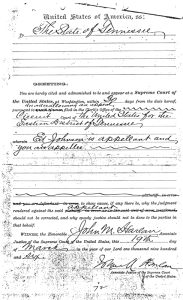
As they prepared the petition, they quickly realized they needed help. Neither attorney was a member of the Supreme Court bar, and membership was (and still is) a requirement for presenting a case at the Court. Noah enlisted Emanuel M. Hewlett, a prominent Black attorney in Washington and a member of the Supreme Court bar, to help them file the paperwork. Hewlett helped Pardon and other southern Black lawyers become members of the Supreme Court bar so they could present cases there. Noah and Hewlett presented their petition to Associate Justice John Marshall Harlan, the justice who oversaw the Sixth Circuit, which included Tennessee. Noah recounted Ed Johnson’s case and evidence that the trial had been fundamentally unfair.
Before Justice Harlan made his decision, Noah traveled back to Chattanooga thoroughly exhausted and completely unsure of what Justice Harlan would decide. As the train pulled into the station, he saw Hutchins waiting for him with a beaming smile. To their surprise, Justice Harlan granted their petition and ordered a stay of execution for Ed Johnson until the Court could review his appeal. The Court moved the case to the top of its docket so it could be heard and resolved as soon as possible.
Sadly, the celebration was short-lived. As Parden and Hutchins dined with friends, another lynch mob gathered outside the Hamilton County Jail. Despite community rumblings about possible violence, the sheriff, Joseph F. Shipp, gave his deputies the night off. The only person on duty was the elderly jailer, Jeremiah Gibson. Sheriff Shipp went home and returned to the jail after receiving a phone call alerting him to an attack. The mob broke into the jail, seized Johnson from his cell, and dragged him down to the Walnut Street Bridge. The sheriff did nothing to stop them. The mob hung Johnson and, when the rope snapped, shot him to death. No one from the lynch mob was arrested that night or in the weeks to come.
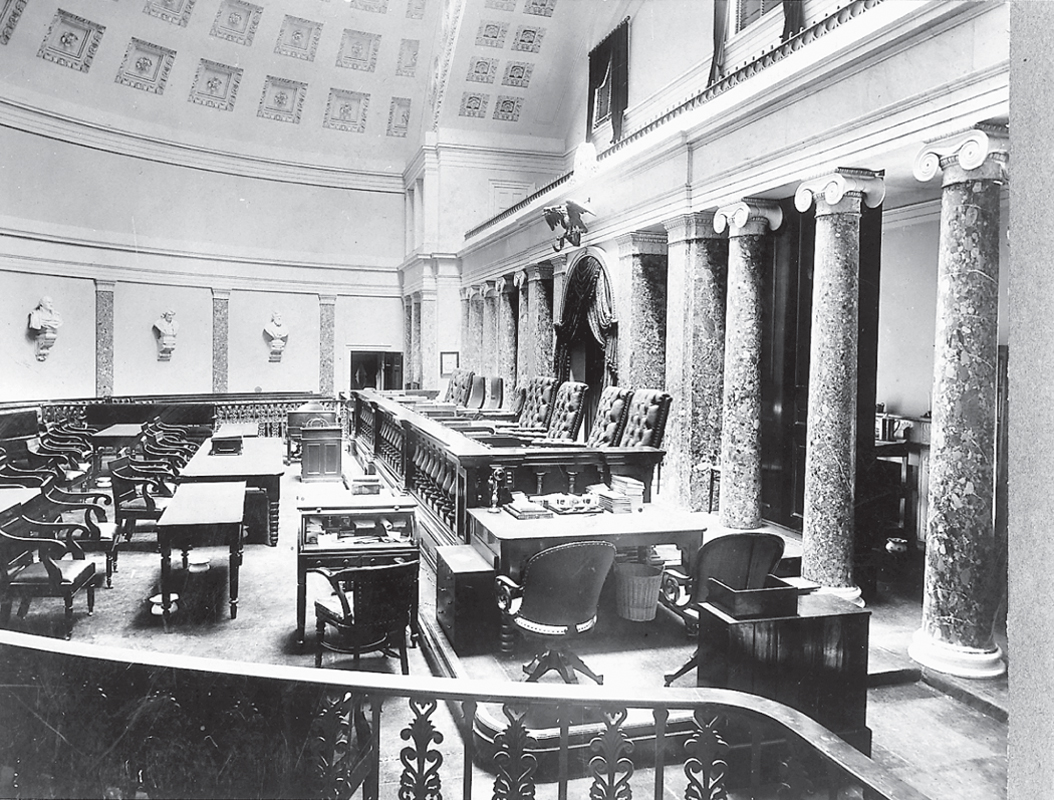
When news of Ed Johnson’s lynching reached the Supreme Court, the justices were stunned. After a months-long federal inquiry and trial, the Supreme Court decided to try Shipp and some of his lynchers for contempt of court. This resulted in an unusual occurrence: the Court held the only criminal trial in its history. In U.S. v. Shipp (1909), the Court convicted Sheriff Shipp and five members of the lynch mob of contempt of court and sentenced them 60 to 90 days in federal prison. Parden and Hutchins attended the oral arguments.
Legacy
During the trial, Chattanooga became dangerous for Noah and Hutchins. After attacks on their homes and law office, both men realized they had to leave Chattanooga as Sheriff Shipp would not prosecute the attackers. Noah traveled for a time, speaking to groups about the Ed Johnson case. Eventually, he and his family relocated to East St. Louis, Illinois, where he resumed his law practice. He became a prominent member of his community and was elected to his county board of supervisors. Later, the governor of Missouri appointed him Assistant Prosecuting Attorney of St. Louis and he became the first African American to hold that position.
In 1906, Noah was admitted to the Supreme Court bar, becoming one of its earliest Black members. He practiced law until his death in 1944. In June 2000, the Georgia Supreme Court unveiled portraits of Styles Hutchins and Noah Parden. Three years later, the Illinois General Assembly passed a resolution honoring Noah Parden’s life and achievements. The United States District Court for the Eastern District of Tennessee also honored the two attorneys with portraits and plaques acknowledging their work in the Ed Johnson case and advancing civil rights.
Discussion Questions
- Why was Noah hesitant to represent Ed Johnson in his appeal?
- How did Noah and his law partner, Styles Hutchins, see the world differently?
- Why did Noah and Hutchins need help appealing Ed Johnson’s case to the Supreme Court of the United States?
- Why was the lynch mob able to break into the jail and seize Ed Johnson from his cell?
Sources
Special thanks to the Honorable Curtis L. Collier for his review, feedback, and additional information.
Featured image: Portrait of Noah Parden. “Styles Hutchins and Noah Parden.” Connections: Eastern District of Tennessee Outreach. https://connections.tned.uscourts.gov/johnson.html
Curriden, Mark and Leroy Phillips. Contempt of Court: The Turn-of-the-Century Lynching That Launched a Hundred Years of Federalism.
LaLumondier, Korryn. “Noah Parden Biographical Sketch.” Chattanooga Racial Justice Bibliographies. University of Tennessee at Chattanooga (2021). https://scholar.utc.edu/cgi/viewcontent.cgi?article=1009&context=racial-justice-biographies
Linder, Douglas O. “Noah Parden.” Famous Trials: Accounts and Materials for 100 of History’s Most Important Trials. University of Missouri – Kansas City School of Law (2025). https://famous-trials.com/sheriffshipp/1059-parden
“Noah Waldo Parden.” Connections: Eastern District of Tennessee Outreach. U.S. District Court, Eastern District of Tennessee. https://outreach.tned.uscourts.gov/parden.html